
Research Arsenal Spotlight 57: Albert Brown 16th Maine Infantry
Albert Brown was born in 1843 to John Hanson Brown and Sarah Copeland (Haywood) Brown of Smyrne, Maine. On August 15, 1863 he was conscripted into Company C of the 16th Maine Infantry to serve a three-year term.
Albert Brown Gets Assigned to the 16th Maine Infantry.
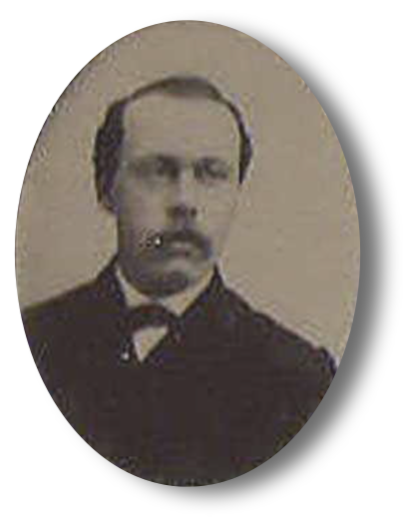
As a drafted man, Albert Brown had no say in what regiment he would eventually be assigned to. In his first letter written to his aunt on September 25, 1863, Albert Brown revealed that he and the other drafted men had been sent to Long Island in Boston Harbor and that he and the other men from Maine had been assigned to the 16th Maine Infantry.
“This is a very pretty place where we are stationed now. Boston city is two or three miles off and all plain in sight.
A detachment of eight hundred left this island for the seat of war a few days before we came here and there were none here besides the guards when we came. Last evening we had an addition to our number of three hundred and fifty men from New Hampshire, That makes five hundred and fifty of us in all. We will be likely to leave when enough get in to make up eight hundred. Those from Maine are detailed for the Sixteenth Maine Regiment. We had no voice in the matter ourselves. The hundred dollars bounty were paid to us when we left Portland.
We have not drilled any yet to speak of. While we were in Portland, we did not drill at all and we only drilled a few times since we have been here. I have had enough to eat, drink, and wear so far. The most we have to do is to answer to our names three times a day at roll call. We live in canvas tents large enough to tent four comfortably. I am getting pretty well used to soldier’s life. I can sleep on the ground now as well as anywhere. I got a pretty bad cold while on Mackie’s Island and my throat was some sore but it has got well now.”
On October 10, 1863 Albert Brown wrote from a camp on the Rappahannock where he had finally joined up with the 16th Maine Infantry after a long journey.
“That night [Thursday] we went on board the boat for Alexandria, arrived at Alexandria Monday noon, stopped there over night, got our guns and tents, and the next morning took the cars for Culpeper. Got in there at one o’clock and then marched five miles to our regiment which is in a portion of Meade’s army.
We pitched our tents with the regiment and was getting along finely till yesterday noon when just as we finished dinner, the order came to strike our tents and be ready to march in one hour. We only marched half a mile to a new camping ground. We pitched our tents again, got them all fixed up in fine style by night, then turned in and went to sleep.
At just midnight, we were routed out and ordered to strike tents, pack knapsacks, and be ready to march in an hour. We got ready and started not knowing whether we were going to or from the enemy. It was very dark and we made very slow progress till daylight. We kept on till noon when we made a halt in a wood which they say is near the Rappahannock river. We stopped and rested a couple of hours when we got the order to pitch our tents on the spot and prepare to stop over night and here we are at present. I expect we will move again in the morning, but to what place or for what purpose I can’t say.”
The Battle of Laurel Hill
The 16th Maine Infantry stayed in their winter quarters until late April, 1864. On April 28, 1864, Albert Brown wrote that the regiment sent all their extra clothing to Washington in preparation for beginning active fighting again.
“We have sent all of our superfluous clothing to Washington. We are allowed to carry nothing only what is necessary to keep us comfortable. One pair of pants, a blouse, one change of under clothes, one pair of boots or shoes, a cap, rubber and woolen blanket, one piece of tent is. the outfit for summer. I have not sent my overcoat but shall when I get a chance. I suppose that I have got to see some fighting this summer. Can’t say that I am very anxious. Still if I have to go into a fight, I intend to do the best I can.”
On May 8, 1864, the 16th Maine Infantry fought at the Battle of Laurel Hill, which was part of a series of battles for control around Spotsylvania Court House. During the time of the conflict, Albert Brown wrote little of the fighting. He sent one message on May 17, 1864 stating he was still alive and would write more later.
“I am going to write a line but don’t know as I shall get a chance to send it. I am still alive and well, Have been in several engagements and escaped the bullets so far.
We are south of the Rapidan in the county of Spotsylvania in what is called the Wilderness and I think we are getting a little the best of the enemy, I will write again as soon as I can.”
It wasn’t until February 19, 1865 that Albert Brown wrote a full account of the engagement.
“The evening of the seventh of May we were in the Wilderness and drawed rations for three days. Most of the boys had heavy knapsacks. They were packed with clothing and valuables which they had managed to keep along with them so far for we had [not] been in any hard fights. About eight o’clock we started and marched all night “quick time.” I was tempted a number of times to throw my knapsack [away] but thought I would hang on to it as long as possible. The mud was about a foot deep and it was so dark we could hardly keep the road. A little after daylight we turned off into a piece of woods beside the road and halted.
We built some fires, got some water out of a swamp close by, and put on some coffee to cook. In about twenty minutes, “Fall in!” Away went the coffee and we had to eat our hard bread as we went along without it. We marched about a mile, passed a lot of cavalrymen huddled in the woods on both sides of the road who said, “Give to um, boys!” We drove them two miles and were still driving them when our ammunition gave out. We marched a little farther [when] the bullets began to whistle about our ears and the shells to burst over our heads and the solid shot to plough up the ground and cut off the trees all about us. Gen. [John C.] Robinson had command of our Division. He made us a short speech, told us he wanted us to take that battery, said it was an easy job [but he] was mightily mistaken.
We were drawn up in line and ordered to fix bayonets. A man was killed in our company a few feet from me by a piece of shell. Charge! and away we went through brier bushes, over fallen trees, and stumps, and through swamps and mud holes. Got out into the open field. Could see the battery in the other edge of the field. We had to go over a small hill. Got most on top of it and were ordered to halt and lie down. We laid flat on our faces and they couldn’t hit us but ploughed the ground awfully on lots of the hill. Forward men! and away we went again.
A few rods farther on I let my knapsack go. We got to where the battery was and it wasn’t there. On we went but couldn’t catch it. Finally we emerged from a piece of woods. The Reb breastworks were a few rods distant and the Rebs were behind them. Whew! What a volley of leaden hail. Couldn’t stand that. Every man for himself and every man started for the rear. I saw Gen. Robinson being helped from the field. He was wounded in the leg and had to lose it. We finally got together again, formed a line of battle, put up breastworks, and remained in the vicinity about a week, fighting and building breastworks alternately.”
16th Maine Infantry at Petersburg
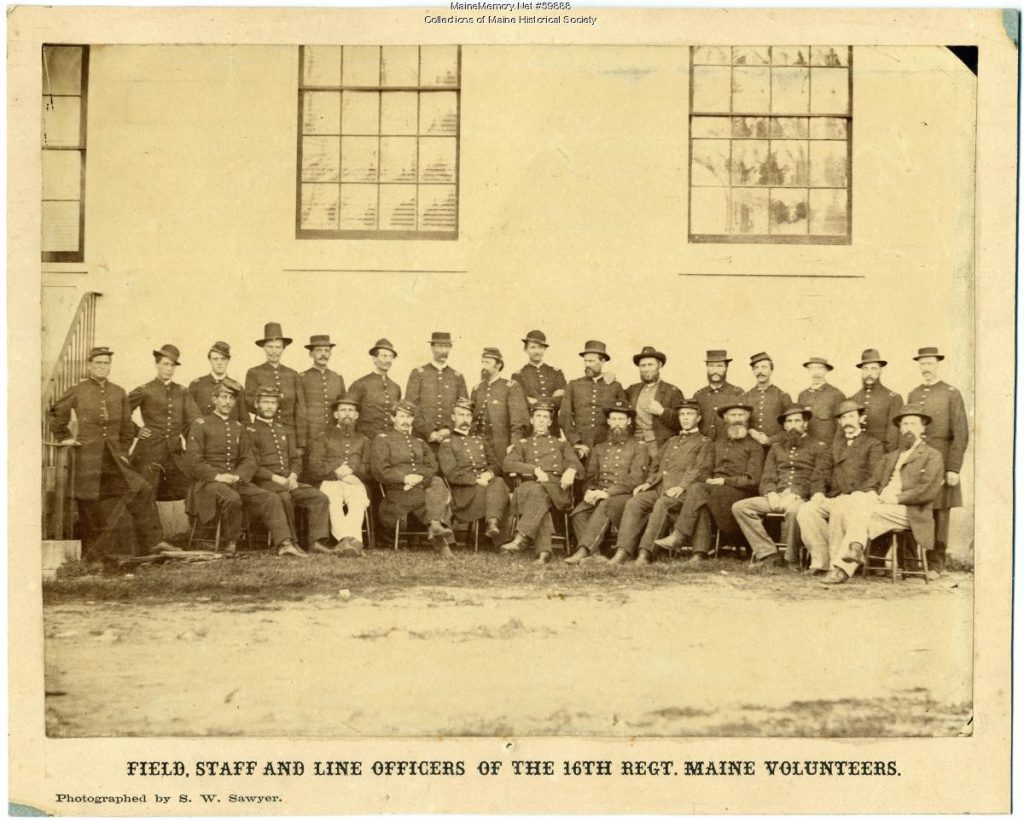
Beginning in June, 1864, the 16th Maine Infantry took up a position outside of Petersburg, Virginia. On July 22, 1864, Albert Brown wrote to his aunt about duty outside of Petersburg and the tentative and unofficial truce between Union and Confederate pickets.
“Well we are still lying in the same old spot as you see by the heading of this letter. We are kept pretty busy with working on forts and entrenchments, picketing and guarding, but it is not hard at all. I enjoy myself better and feel better too while at work than when lying still all of the time. I came out on picket last night and have got to stay forty-eight hours. We have nothing to do in the day time at all, In the night we have to keep awake and on the lookout one third of the time. The Reb pickets are a little farther from us than it is from where you live to the depot. As you see, we are in pretty close quarters to each other along our line. They have come to a sort of treaty not to fire at each other so we do not have to keep concealed at all. Our boys meet them half way and trade with them for tobacco and corn meal giving hard tack, sugar and coffee &c. in exchange.”
On August 3, 1864, Albert Brown again wrote, this time about the recent Battle of the Crater. He counted himself fortunate that the 16th Maine Infantry was out of the worst of the fighting, which occurred on the opposite flank.
“We have had quite an engagement in our vicinity since I wrote to you last. You will probably read all of the particulars of the fight before you get this letter. The principle fighting was along Burnsides front. Our corps joins his on the left. The enemy had become very impudent. As our folks did not take much notice of them, I suppose they had come to the conclusion that we had but a very small force here and they made it a practice to open upon us with shot and shell about five o’clock every night wherever they thought they could do the most mischief.
Our folks got everything all ready, undermined one of their forts about half a mile from here and carried in a bit of powder, stationed a large number of siege guns and mortars all along the line besides the light artillery already there. Everything was ready the night beforehand. Just at the break of day the next morning, the signal was fired and in an instant after the fort went up, then our batteries opened all along the line. I suppose the Rebs were somewhat surprised. Their batteries opened on us as soon as possible but were soon silenced and they have not fired a gun along our front since.
There was a great slaughter along Burnsides front on both sides. A great number of negroes were killed. They made a charge and were defeated. The 31st and 32nd Maine were also very much cut up. I think we were lucky in being in the Fifth Corps at that time.”
Albert Brown served in the 16th Maine Infantry through the end of the war. Most of the regiment mustered out on June 5, 1865 but the recruits taken on were briefly transferred to the 20th Maine Infantry before being mustered out on July 16, 1865. After the war he married first Lorena Hawkes (1844-1886) and later Almena W. Knight. He died in 1922. The Albert Church Brown Memorial Library in China, Maine is named after him and is housed in the old family home that was given to them by Almena (Knight) Brown.
We’d live to give a special thanks to William Griffing of Spared & Shared for his work in transcribing and sharing these letters.
To read more of Albert Brown’s letters as well as thousands of other Civil War letters and documents, sign up for a Research Arsenal membership.
If you enjoyed this article, check out some of our other featured collections like John Clarkson Jay of the 71st New York National Guard and Charles Brayton of the 3rd Massachusetts Infantry.
