
RG 94 Spotlight: The 32nd Indiana Infantry
The Research Arsenal is proud to be digitizing and adding historical records of Civil War regiments held at the National Archives to our online database so that researchers and historians can access material that previously required a trip to Washington D.C. The 32nd Indiana Infantry is one of the many regiments that has been added to our database.
A Regiment of “German Sons”
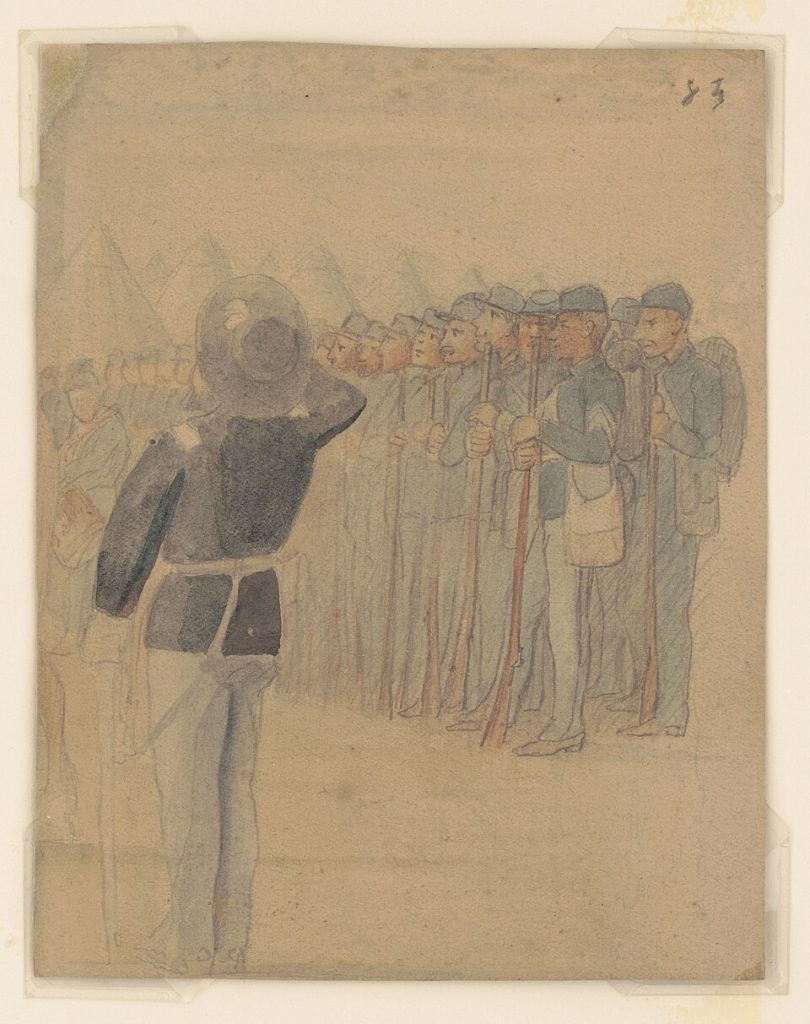
The story of the 32nd Indiana Infantry is inseparable from the immigrant experience in the Civil War. Organized in August 1861 at Indianapolis, the regiment was composed almost entirely of German-Americans—many of them political refugees from the failed revolutions of 1848.
Under the leadership of Colonel August Willich, himself a veteran of European revolutionary struggles, the regiment quickly gained a reputation for discipline and professionalism. Their drilling and battlefield conduct were shaped by European methods, particularly Prussian tactics, which set them apart from many volunteer regiments early in the war.
Observers noted that the unit’s precision and cohesion made a strong impression. As one contemporary description summarized, the regiment was known for its “highly disciplined” nature and distinctive training methods. This discipline would soon be tested under fire.
Baptism of Fire at Rowlett’s Station
The regiment’s first combat came at the Battle of Rowlett’s Station on December 17, 1861, in Kentucky—a relatively small engagement that nevertheless became central to the unit’s identity. Tasked with protecting a vital railroad bridge over the Green River, the 32nd Indiana found itself facing a much larger Confederate force, including the famed Texas cavalry.
The battle unfolded in dense woodland and open ground, where the Hoosiers held firm despite repeated attacks. Contemporary accounts emphasize the imbalance of forces, noting that “fewer than five hundred Union infantrymen…faced roughly thirteen hundred Confederates.”
Even more remarkable was their ability to withstand cavalry charges in open terrain—an uncommon feat for infantry early in the war. As later reports recalled, the regiment’s stand “against repeated cavalry assaults became a minor sensation.”
Though the battle itself was tactically inconclusive, the Union achieved its strategic objective. The railroad remained open, and the regiment earned praise from higher command. General Don Carlos Buell officially commended the unit for its “gallantry.” For the men of the 32nd Indiana, Rowlett’s Station was more than a fight—it was proof of their effectiveness as soldiers.
Memory and Sacrifice: The Bloedner Monument
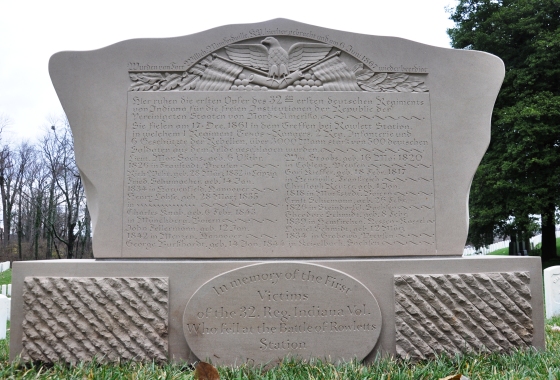
In the aftermath of Rowlett’s Station, one of the regiment’s soldiers, Private August Bloedner, undertook a remarkable act of remembrance. He carved a stone monument to mark the graves of fallen comrades—an artifact now considered the oldest surviving Civil War monument. The monument bore the names of thirteen soldiers, all German immigrants who had died in service to their adopted country. Their sacrifice carried symbolic weight:
“The 13 soldiers…enlisted, fought and died for their adopted country.”
The inscription, written in German, reflected the dual identity of the regiment—men who were both immigrants and Union soldiers.
Today, the monument stands as a powerful reminder of how deeply immigrant communities were invested in the Union cause, even in the war’s earliest and most uncertain days. It has been conserved and moved to the Frazier History Museum in downtown Louisville, Kentucky. A duplicate of the monument was carved in sturdier marble and installed in September 2011 at Cave Hill Cemetery.
From Shiloh to Atlanta: A Hard-Fought War
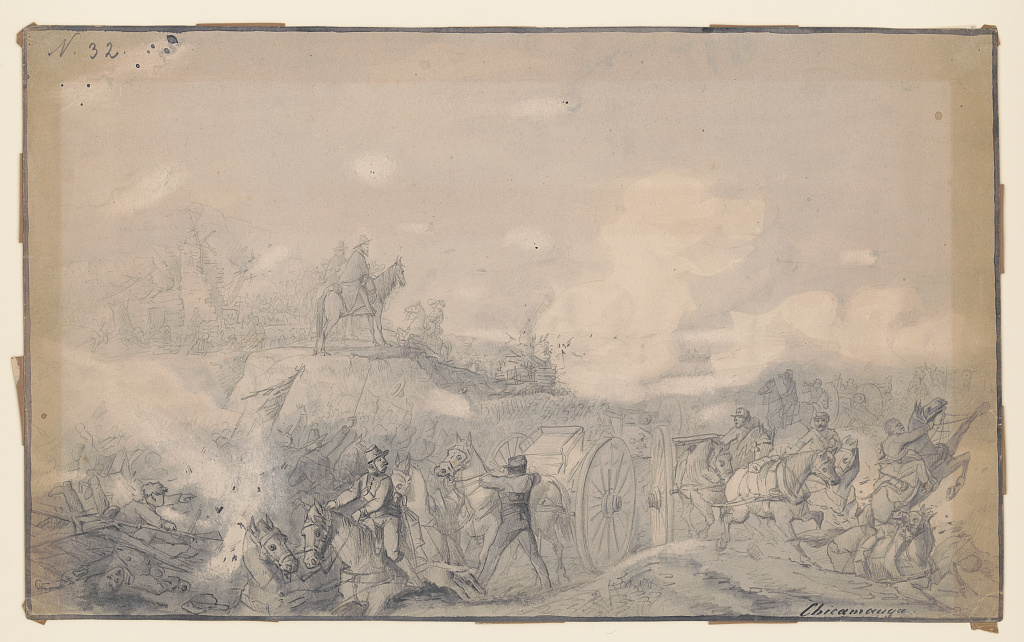
After Rowlett’s Station, the 32nd Indiana moved south with the Army of the Ohio, participating in some of the most significant campaigns in the Western Theater. At Shiloh in April 1862, the regiment endured the chaos of one of the war’s bloodiest early battles. It later fought at Corinth, Stones River, and Chickamauga—engagements that tested even veteran units.
In 1864, the regiment marched with Union forces through Georgia during the Atlanta Campaign, fighting at places such as Resaca, Kennesaw Mountain, and Peachtree Creek. These campaigns transformed the regiment from green volunteers into seasoned veterans. Yet attrition was constant. By the later years of the war, the unit had been reduced and reorganized, with remaining soldiers continuing service in garrison and field operations.
Discipline, Identity, and Legacy
The 32nd Indiana Infantry stood out not only for its battlefield service but for its unique cultural identity. Its German-speaking ranks, European leadership, and strict discipline made it one of the most distinctive regiments in the Union Army. Their success demonstrated that immigrant soldiers—often viewed with suspicion in American society—could become some of the most effective troops in the field. At Rowlett’s Station, they proved their courage. In the long campaigns that followed, they proved their endurance.
Mustering Out—and Remembering
After years of campaigning, the regiment’s remaining members were sent to Texas, where they were finally mustered out in December 1865. Their service had spanned the entire arc of the war—from its uncertain beginnings in Kentucky to its conclusion on the far edges of the former Confederacy. Today, their legacy endures most tangibly in the Bloedner Monument—a simple, hand-carved memorial that speaks across generations. It reminds us that the Civil War was not only a struggle between North and South, but also a story of immigrants who fought—and died—for a nation they had chosen as their own.
Sources
The Research Arsenal is proud to hold 410 digital scans of the 32nd Indiana Infantry’s regimental history on its database. These consist of nearly 400 pages of material from the National Archives Records Group 94 files. These include Regimental Descriptive books, Order books, Morning Reports, and more. Visit the Research Arsenal, click on “Search NARA Records” then select “RG94” and “32nd Indiana Infantry” from the drop-down menus. In addition, the Research Arsenal contains photographs, letters, and other forms and documents relating to the 32nd Indiana Infantry.
- National Cemetery Administration – History of the 32nd Indiana Infantry Monument
- National Park Service – 32nd Indiana Infantry Unit Details
- Wikipedia – 32nd Indiana Infantry Regiment
- Western Theater Civil War – The Cincinnati Company: 32nd Indiana at Rowlett’s Station
