
Research Arsenal Spotlight 61: Constantine Hege 48th North Carolina Infantry
Constantine Hege was born in 1843 to Solomon Hege and Catharine (Guenther) Hege of Davidson County, North Carolina. The Hege family were Moravians, an early Protestant religion originating from the Bohemian Reformation in the late 1400s. Religiously, they were opposed to war, but nevertheless Constantine Hege was conscripted into Company H of the 48th North Carolina Infantry in the summer of 1862.
Constantine Hege Arrives at Camp
Constantine Hege’s letters begin on August 8, 1862 at Camp Holmes outside Raleigh, North Carolina. Though he opens his letter with a description of his trip, from the beginning its clear that he finds camp life difficult and is less than thrilled to be there.
“I enjoyed my ride tolerably well. I saw a great many things that interested me very much. I counted 14 engines at the company shops. I also saw the state house and many other fine buildings. We are now in Camp Holmes about 4 miles from Raleigh. We have good tents and a beautiful grove to camp in. There are also several wells of good water in the camp. We are guarded all round by stout looking guards with muskets well loaded.
I will now tell you what I think of camp life. I think it is a very hard life. We drawed 440 lbs. of flour for 4 days. We also drawed 3 skillets & 1 pot for about 20 men to prepare their victuals in. I do not like such fare nor I am not content at present. I feel very much downcast but I think that several of my tent mates are very nice men and I hope that I can after a while do better if I must stay in camp.”
In a letter to his father on August 13, 1862, Constantine Hege implored him to try and find a substitute for him if at all possible.
“It fell to my lot to go in Capt. [John H.] Michael’s company. I there saw very many of my acquaintances which I had not seen for several months which revived me somewhat but I am not satisfied here. I do not like to hear of going to face the cannons and the muskets. I would be very glad if you could hire a substitute in my place because I cannot stand such a life with any enjoyment at all. I went over to see the flying artillery. There were 12 cannons there, and for a person to see them, it would make the cold chills run over anyone, I think. Therefore, I want you to try to hire a substitute and if you do hire one, get a competent man to bring him to Captain [John H.] Michael’s company, 48th regiment, N. C. troops.”
Constantine Hege also described meeting a few Yankees and talking with them.
“I saw about 300 Yankees from Salisbury on their way home at Weldon. I talked with several of them. They seemed to be as fine a set of men as are anywhere.”
The 48th North Carolina Infantry at Antietam and Fredericksburg
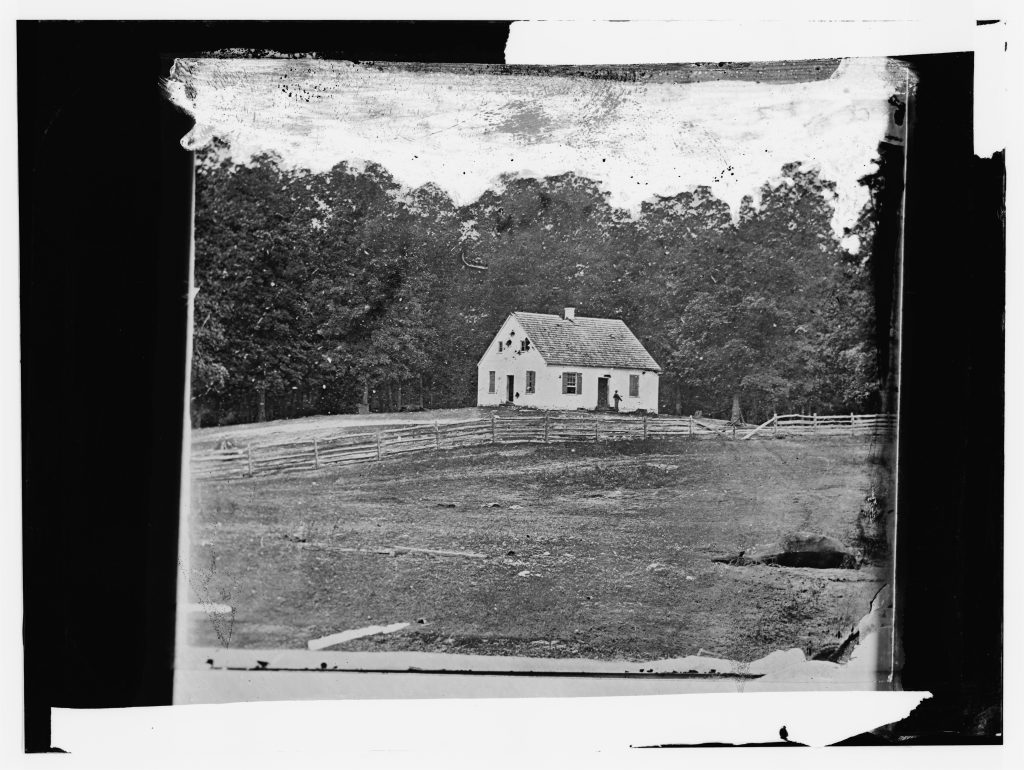
On September 21, 1862, Constantine Hege wrote home about the recent battle of Antietam where the 48th North Carolina Infantry saw heavy fighting.
“We have been marching for about 20 days and sometimes we have [had] to march all night. We crossed the Potomac River four times and over into Maryland. The first time that we went over, we staid 2 or 3 days and came back safe. And then we went to Harpers Ferry and there we had a very hard bombing last Monday, but we whipped the Yankees without any musket firing except from the pickets. We captured a great many wagons and cannons and taken about 800 prisoners. We then marched over into Maryland again on last Tuesday evening and on Wednesday morning [17 September] about nine or ten o’clock, we were marched in the battlefield and we made a charge on one of the enemy’s batteries. But when we got [with]in about 75 or 100 yards of them, we were bound to retreat because they were too strong for us, and a great many of our men were killed and wounded. There were about twenty wounded in our company. Jackson Koontz was killed. Augustus Bryant was mortally wounded and died.”
The 48th North Carolina Infantry was stationed at Fredericksburg beginning in November, 1862. During this time, Constantine Hege spent much of his time waiting for a box his family sent with clothing and other goods for him. He later found out that the box was stolen, an unfortunate circumstance that may have ended up saving his life. One December 18, 1862 he wrote about the recent Battle of Fredericksburg.
“There has been a very hard battle fought here last Saturday and our regiment was in the hardest of the fight. I did not have to go into the battle because I am so near barefooted. The Colonel gave orders that all the barefooted men should stay at the camp. I can tell you I was glad then that my shoes did not come because I would rather loose [lose] a hundred dollars than to go in a battle. There were a great many killed and wounded it is said that there were ten thousand Yankees killed during the battle. I do not know how many of our men were killed but I know that there were a great many wounded. There were 19 men wounded and one killed in our company. The human suffering, the loss of life, and above all, the loss of many a precious soul that is caused by war. Would to God that this war might close off this year and that we all could enjoy the blessing of a comfortable house and home one time more. I never knew how to value home until I came in the army.”
Capture and Oath of Allegiance
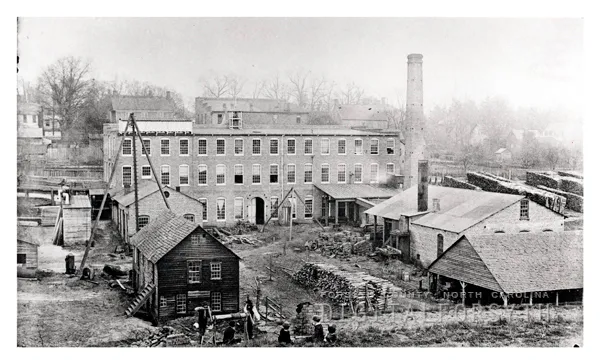
Constantine Hege was captured at the Battle of Bristoe Station on October 14, 1863. His next surviving letter was written on October 31, 1863, though in it he mentions that he had written a couple of letters previous to it. He was incarcerated at the Old Capitol Prison, though by the time he wrote the letter it appears he had already taken the oath of allegiance and was awaiting his release.
“I am still here in the above named prison, but I think that I will be released and set free in a week or so. I have got in with a pious young man who lives in Philadelphia, Pa., to help me to get is some business there to make a living. I want to try and get Rev. F. F. Hegen or Rev. Mr. Senamon to help me along also if I can. There are several of my acquaintance here with me who also are a going North. I think we will be provided for by Providence. I hope you will not trouble yourselves about me as I can assure you I have received very kind treatment so far. Do not believe false reports.”
Despite Constantine Hege’s belief that he would soon be released, he remained imprisoned until March, 1864, writing several more short letters during that time (prisoners were limited to a single page). His last letter from the prison was dated February 1, 1864.
“I received fifty dollars from Rev. F. F. Hagen about two weeks ago. He will furnish me with three hundred dollars as by your order. I am very thankful for your kindness in writing to Rev. Mr. Hagen to send me money as I was in need, but now I am very comfortably clothed and am doing well as a prisoner.
I often think of my dear old home and long to get there but here I am many miles from home. But it all has been so ordered by Providence and that for the best. I therefore take it patiently trusting in God to protect me from all harm and danger and to keep me safe, alive, and well, and I hope by his allwise providence to meet you all on earth again, but if not, God grant that we may all meet in Heaven above.”
Once released, Constantine Hege traveled to Bethlehem, Pennsylvania. On April 1, 1864, he wrote home about his new circumstances.
“I arrived here at Bethlehem on the 15th of March and went to Rev. F. F. Hagen’s house. He was very glad to see me and aided me in procuring a good place to board and to work. I am working at the Bethlehem Iron Works. My wages are $1.35 per day and my board costs $3.50 per week. I am now boarding with Mr. John Fimstick—a Moravian family—and they are very kind to me as I will soon tell you.”
In May, 1865, Constantine Hege began attending a Moravian school in Pennsylvania and asked his father’s help in affording tuition. He also mentioned missing his home in the South, even while renouncing secession.
“I suppose you can readily see by my letter that I am very much out of practice. I commenced going to school on the 26th of April and expect to go until the end of the session, which is in July, unless you wish me to come home before then. I love the North very much but not so well yet as the dear South, where I spent my youthful days in sports and where the rich fruit so plentifully abounds. I do not mean that I love secession or anything connected therein. But I love the county, the climate, and all the good loyal Union people—because there is my home and parents and brother and sister, whom I love so very much.”
On June 29, 1865, Constantine Hege wrote a very interesting letter to his mother giving his thoughts about the war and the Confederacy, seemingly in reproach for his mother’s attitude against northerners.
“You seem to be down on the Yankees as you call them. You say they work on Sunday. That is nothing strange to me as I worked many Sundays in the Rebel army while I was in the service of our brave President Jeff Davis who dressed up in women’s clothes—brave fellow was he!
I suppose you also call me a Yankee. If you do, all right. I consider that more of an honor than a disgrace. I have taken a particular fancy to the Yankees (so called) and especially to the young ladies who seem to take pleasure of being in company with a southern boy and they very seldom ever mention anything of my having been in the Rebel army which I would consider a disgrace.”
Constantine Hege continued his schooling and later returned to North Carolina and opened a foundry. He received a patent for a set of works for circular sawmills and began manufacturing sawmills and woodworking machinery of his own design. He married Frances Mary Spaugh in 1870 and had several children. After her death he married Martha Caroline Spaugh. He died in 1914.
We’d like to give a special thanks to William Griffing of Spared & Shared for his work in transcribing and sharing these letters.
To read more of Constantine Hege’s letters and access thousands of other Civil War letters and documents, sign up for a Research Arsenal membership.
If you enjoyed this article, check out some of our other featured collections like Gustavus Williams of the 51st Massachusetts Infantry and Benjamin Blatchford of the 2nd Massachusetts Heavy Artillery.
