
From Decoration Day to Memorial Day: The Origins of America’s Day of Remembrance
From Decoration Day to Memorial Day: The Origins of America’s Day of Remembrance
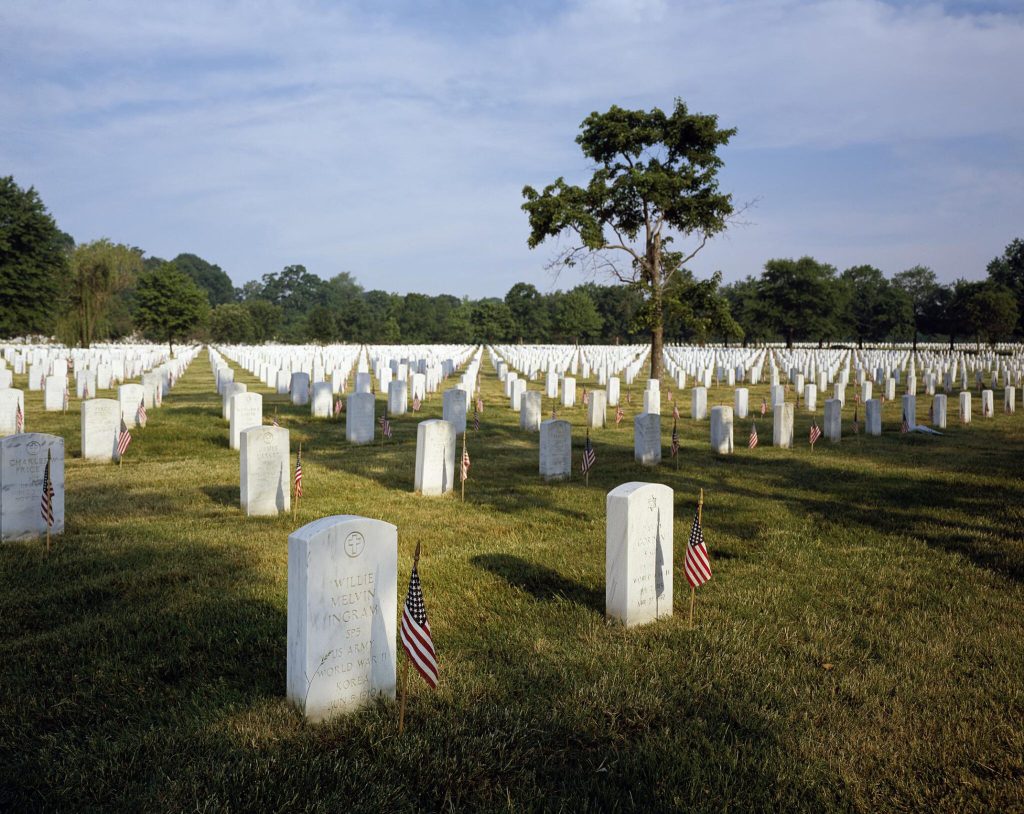
Today, Memorial Day is recognized as the nation’s annual day to honor military personnel who died in service to the United States. Observed on the last Monday in May, the holiday is marked by ceremonies, parades, flags placed on graves, and moments of remembrance across the country. Yet the origins of Memorial Day reach back to the aftermath of the Civil War, when Americans sought ways to mourn the staggering loss of life caused by the conflict. Long before it became a federal holiday, it was known as “Decoration Day,” a tradition centered on decorating the graves of fallen soldiers with flowers and memorial tributes.
In the final years of the Civil War and immediately afterward, communities throughout both the North and South began holding springtime observances to honor the dead. According to the National Cemetery Administration, men and women alike participated in these ceremonies, decorating soldiers’ graves with flowers and other tributes. The practice itself was not entirely new, as decorating graves had roots stretching back to ancient Roman customs and nineteenth-century European traditions. What made these American observances unique was the enormous scale of grief after the Civil War, which left hundreds of thousands dead and burial grounds spread across nearly every town and community in the country.
Because these memorial traditions developed independently in many places, the exact birthplace of Memorial Day has long been debated. The VA history notes that recent scholarship points to the women of Columbus, Georgia, who in April 1866 advocated for a clearly designated day to place flowers on the graves of Civil War soldiers. Other communities also held early commemorations. In Boalsburg, Pennsylvania, women decorated soldiers’ graves as early as 1864, while in Charleston, South Carolina, formerly enslaved African Americans and white abolitionist allies organized a massive memorial event in May 1865 at a cemetery containing Union dead. These observances demonstrated that the desire to honor fallen soldiers existed across regional and racial lines during the difficult years following the war.
The movement toward a formal national observance gained momentum through the efforts of General John A. Logan, commander-in-chief of the Grand Army of the Republic, a powerful organization of Union veterans. On May 5, 1868, Logan issued General Orders No. 11, often called the “Memorial Day Order.” The order officially established a nationwide Decoration Day and designated May 30, 1868, as the date on which Americans would decorate the graves of soldiers who had died during the Civil War. Logan intentionally selected May 30 because it was not associated with any particular battle and because flowers would be in bloom across the country. His order declared that the graves of fallen comrades should be “strewn with flowers or otherwise decorated,” while allowing local communities to organize ceremonies in whatever manner they considered appropriate.
First National Decoration Day – 1868
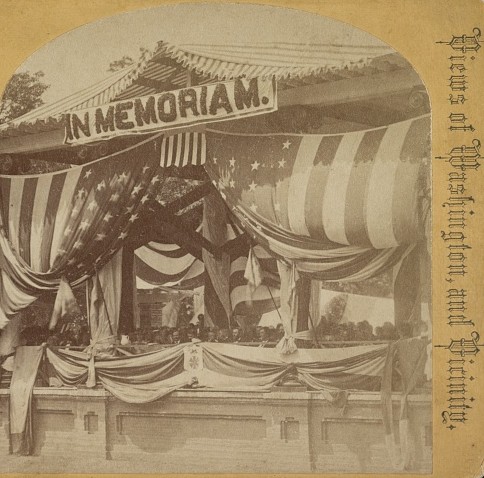
The first national Decoration Day observance took place only weeks later at Arlington National Cemetery in Virginia. At the time, Arlington already held the remains of more than 11,000 Union soldiers and several hundred Confederate dead, many of them unidentified. The cemetery itself carried deep symbolism, as it had once been the estate of Confederate General Robert E. Lee before becoming a national burial ground during the war. For the ceremony, the Arlington mansion was draped in mourning decorations and surrounded by flags, while the tomb of over 2,000 unknown soldiers received elaborate floral arrangements.
More than 5,000 people attended the 1868 ceremony at Arlington National Cemetery. Veterans, government officials, families, and ordinary citizens gathered to honor the dead. Congressman and former Union General James A. Garfield delivered one of the day’s principal addresses, speaking about sacrifice, patriotism, and the duty of the living to remember the fallen. After the speeches concluded, participants spread throughout the cemetery, placing flowers on the graves of both Union and Confederate soldiers. The scene established many of the traditions still associated with Memorial Day today: patriotic speeches, floral tributes, military remembrance, and public ceremonies at cemeteries.
Decoration Day quickly became an annual observance in Northern states, particularly through the influence of the Grand Army of the Republic. Veterans’ organizations organized parades, prayer services, speeches, and cemetery gatherings each spring. Families often attended these ceremonies together, decorating graves with flowers, wreaths, and American flags. Over time, the observance became deeply woven into American civic life, serving not only as a memorial for the dead but also as a way to preserve the memory of the Civil War generation.
![Daisies gathered for Decoration Day, May 30, 1899. Frances Benjamin Johnston, 1899. (Johnston [Frances Benjamin] Collection, Prints & Photographs Division, Library of Congress).](/wp-content/uploads/2026/05/Daisies-for-Decoration-Day-1899.jpg)
Congress officially established Memorial Day as a federal holiday in 1971 through the Uniform Monday Holiday Act, moving the observance to the last Monday in May. Despite changes in name and date, many traditions from the original Decoration Day observances continue today. Cemeteries are still decorated with flowers and flags, patriotic ceremonies remain central to the holiday, and Arlington National Cemetery continues to host one of the nation’s most prominent Memorial Day commemorations. More than 150 years after General Logan’s order, the holiday remains rooted in the same purpose that inspired Americans after the Civil War: honoring those who gave their lives in service to the nation and ensuring their sacrifice is never forgotten.
Sources
“Memorial Day History.” U.S. Department of Veterans Affairs, National Cemetery Administration.
“General Orders No. 11.” U.S. Department of Veterans Affairs, National Cemetery Administration.
“First Official National Decoration Day.” National Park Service.
