
Research Arsenal Spotlight 64: Thomas Griffith 116th New York Infantry
Thomas Griffith was born in 1846 to William and Clarinda Griffith of Gowanda, New York. He was very young when he enlisted in August, 1862, around the age of 15 or 16 years old, although he gave his age as older on the muster rolls. In this collection of six letters to an unnamed aunt, Thomas Griffith details the twisted path that led to his enlistment in the 116th New York Infantry.
Thomas Griffith’s Enlistment Story
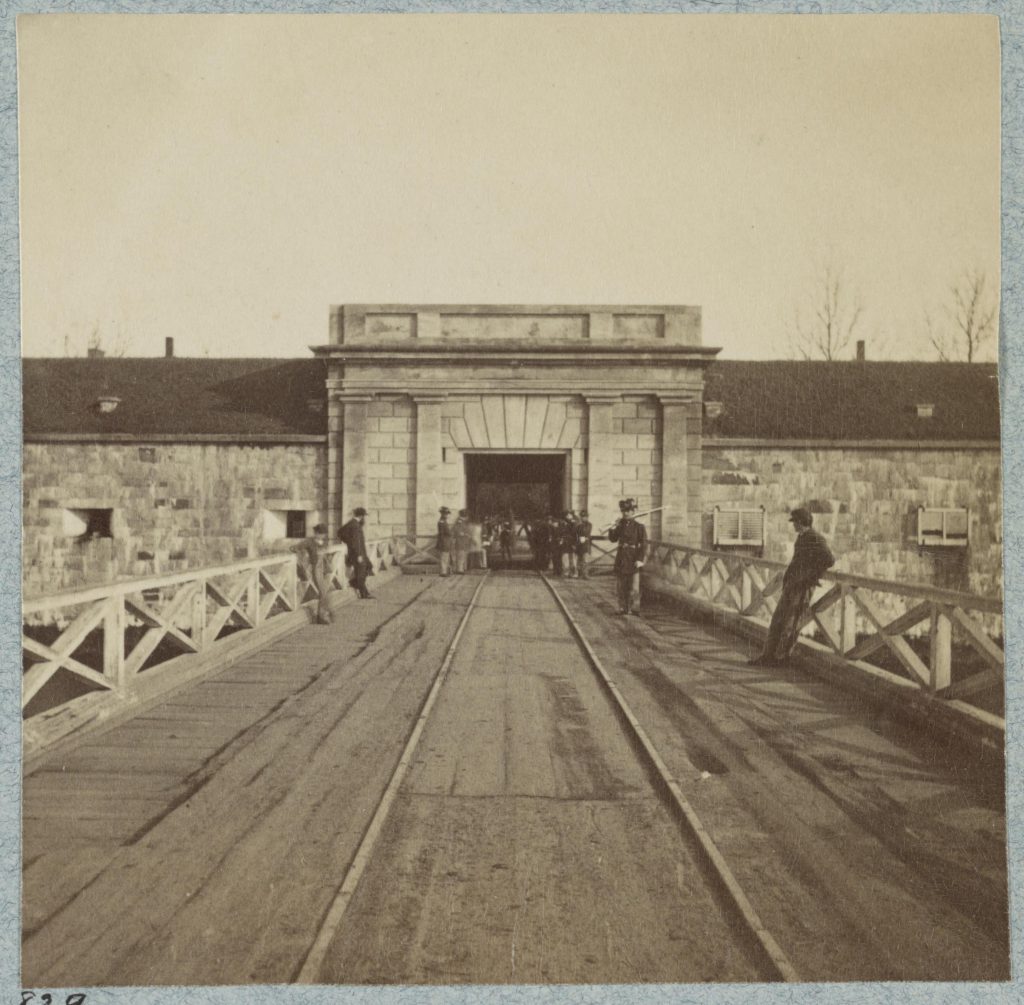
A frequent topic of the letters Thomas Griffith wrote was how he came to be enlisted in the 116th New York Infantry, along with his hope that he would soon be able to get a discharge. In his first letter written on September 1, 1862, Thomas Griffith made the sad declaration of, “My father is dead. He died about four months ago.”
In another letter written on March 14, 1863, Thomas Griffith gave an account that suggests his enlistment was related to the death of his father and a relative named John whom he did not want to live with. The girls mentioned in the passage are Thomas Griffith’s three younger sisters, Anna, Louisa, and Rosa.
“About the girls coming up there, I should think that John would send them up there. He has had the care of all the stuff that was left and I think he has sold a good deal of the things. He wanted me to come and live with him but I would not do it after he had acted so mean to me. He hired Quint for him and then he wanted me but I would not go. I will never step inside of his door so long as I live. He has acted mean to me. He never noticed [me] till he wanted me to go and work for him. He thought that I was of no account but he found out that I was for I had as good a suit of clothes as any boy in Gowanda that work and fought.
I went to Buffalo, went on board the Towanda and went on one trip to Chicago and then I—like a fool—enlisted. I could of got out of the regiment if I had a mind to. I wish I had. I thought first that I would enlist [in] the Irish Brigade.”
Though Thomas Griffith did not enlist in the Irish Brigade, he didn’t enlist directly in the 116th New York Infantry either. He explained the several regiments he served with in a letter written on January 15, 1863.
“I enlisted first in the Eagle Brigade [100th NYSV] for a drummer. I then got into the Fire Zouaves [73rd New York Infantry] and then I got to exchange in the 116th [New York] which I have been with for 5 months. I wish I could get my discharge and I would come up there. I do not like it at all.”
It was almost certainly Thomas Griffith’s young age that had him enlisting initially as a drummer but by the time he transferred to the 116th New York Infantry he was listed on the rolls as 19 years old (despite actually being around 17) and he served as regular private.
Thomas Griffith and Skirmishes with Confederates
While the story of how he came to be enlisted unfolded over several letters written by Thomas Griffith, he wrote much more often about various skirmishes his fought in. In his first letter to his aunt written September 1, 1862, he wrote from Fortress Monroe and mentioned that he had already been in skirmishes.
“We have not seen a regular battle but we have seen some hard skirmishing. We went out in Pennsylvania and drove the rebels out of there. The new Monitor is going with us and a lot of other gunboats. The two largest guns in the world is lying at the fort—the ‘Union’ and the ‘Lincoln.’ We went out ashore and pitched our tents and expected to camp there for about two weeks but the orders came that we had all have to strike the tents and go aboard the ships and so we did.”
On January 15, 1863, Thomas Griffith wrote his second letter and explained what the regiment had been doing for the past few months.
“We left Fortress Monroe and set sail for Ship Island where we arrived after about ten days sail past the coast of Florida and through the Gulf of Mexico. We went to Ship Island two weeks when we set sail and came up the Mississippi river. We are about ten miles from New Orleans.
We have had a hard battle. There is about one half of the regiment killed and a good many wounded. There is not more than three hundred fit for duty. I was in the battle but I did not get hurt much—I was knocked down though. But I am thankful that I did not get hurt worse.”
Two days later Thomas Griffith wrote slightly more about the recent fight.
“There is not over three hundred men able to do duty. Some are sick and others wounded and the rest is dead. I got out of there pretty good. I had my ramrod knocked out of my hand when I was loading my gun with a bullet. We then charged on them and a got knocked down again. We drove them back. We are bound to open the Mississippi river. All say that they have took Vicksburg and I think that they are going to send us up there. I hope they will send us up there.”
Thomas Griffith was misinformed about Vicksburg. The city was not taken until July 1863.
The 116th New York Infantry at Baton Rouge, Louisiana
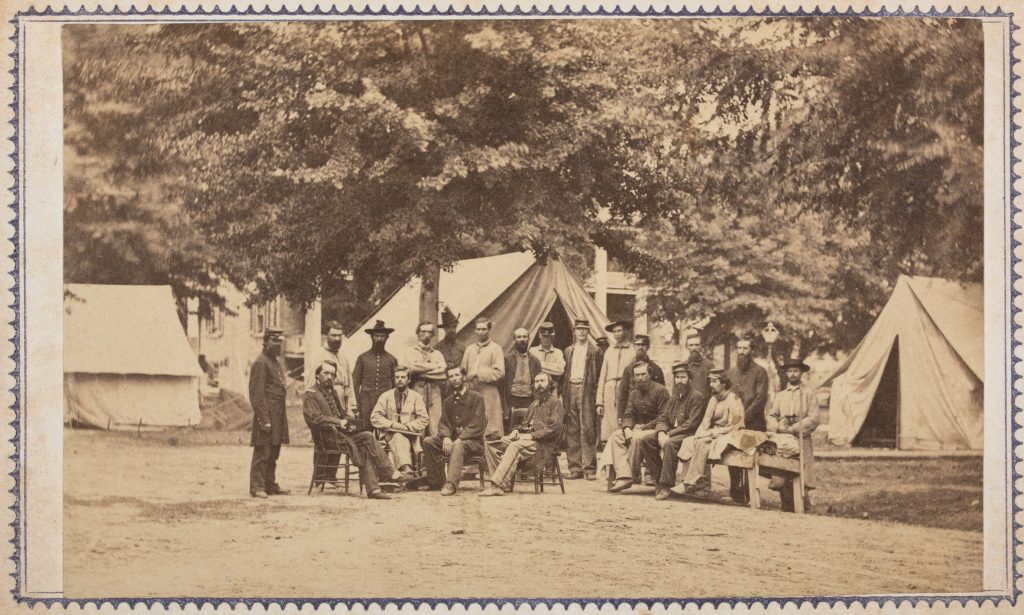
Beginning in March, 1863, Thomas Griffith’s letters were datelined from Baton Rouge, Louisiana. In a letter written on March 14, 1863, Thomas Griffith revealed that he spent several weeks in the hospital with a bad fever. Despite that, he was still up to date on the movements of the 116th New York Infantry.
“Our regiment left this morning and lots of other regiments too. I think that they are going up to Port Hudson. There was some gunboats and mortar boats went up the river today. I saw General Banks and his staff riding around. There was a grand [review] the other day and I saw him go by.”
In a letter fragment dated to sometime around March, 1863, Thomas Griffith wrote more about the 116th New York Infantry’s operations in Louisiana.
“We was a going up to Red River but it was so swampy that we could not go any further so we went back and went on board the boat and come back and went out to our camp. Then we got orders the next day to go out to the pontoon bridge and build it up so that we could cross it to go up to Port Hudson. We went out there and commenced to work when the rebel cavalry came and drove us back. We had no guards out so they took all of the things that we had to work with and a good many guns.”
On April 27, 1863 Thomas Griffith wrote another letter and by this time he was back with his regiment. He described his regiment’s location and duties in Baton Rouge.
“Our regiment is stationed at Baton Rouge inside of the breastworks where we are doing picket and guard duty. We expect to go to Donaldsonville in a little while. It’s awful hot here in the daytime and at night the mosquitoes bite. We have all drawn mosquito bars. The boats are up to Port Hudson still. We can hear firing all the while.
We have been out chopping down the trees all around so that the guns can take a good range of the enemy if they attack us. They say that they are going to take Baton Rouge from us. There is six mortar boats lying alongside of the river so that they can shell them out.”
A bit later in the letter he added some more detail.
“We have some hard times on picket with the Tennessee Cavalry. They come inside of our lines and try to steal and plunder. There is lots of guerrillas all around in the woods. We have three lines of pickets and one line of cavalry.”
Sadly, Thomas Griffith was killed a month after this letter was written while fighting at the Battle of Port Hudson.
We’d like to give a special thanks to William Griffing of Spared & Shared for his work in transcribing and sharing these letters.
To read more Thomas Griffith’s letters as well as access thousands of other Civil War letters and documents, sign up for a Research Arsenal membership.
If you enjoyed this article, check out some of our other featured collections like Josiah Osgood of the 24th Massachusetts Infantry and Otis Whitney of the 27th Iowa Infantry.
Finally, we previously highlighted a collection from another soldier in the 116th New York Infantry, Albert Jenkins Barnard.
