
Understanding National Archives Records Group 94: A Treasure Trove for Civil War Research
What is Records Group 94?
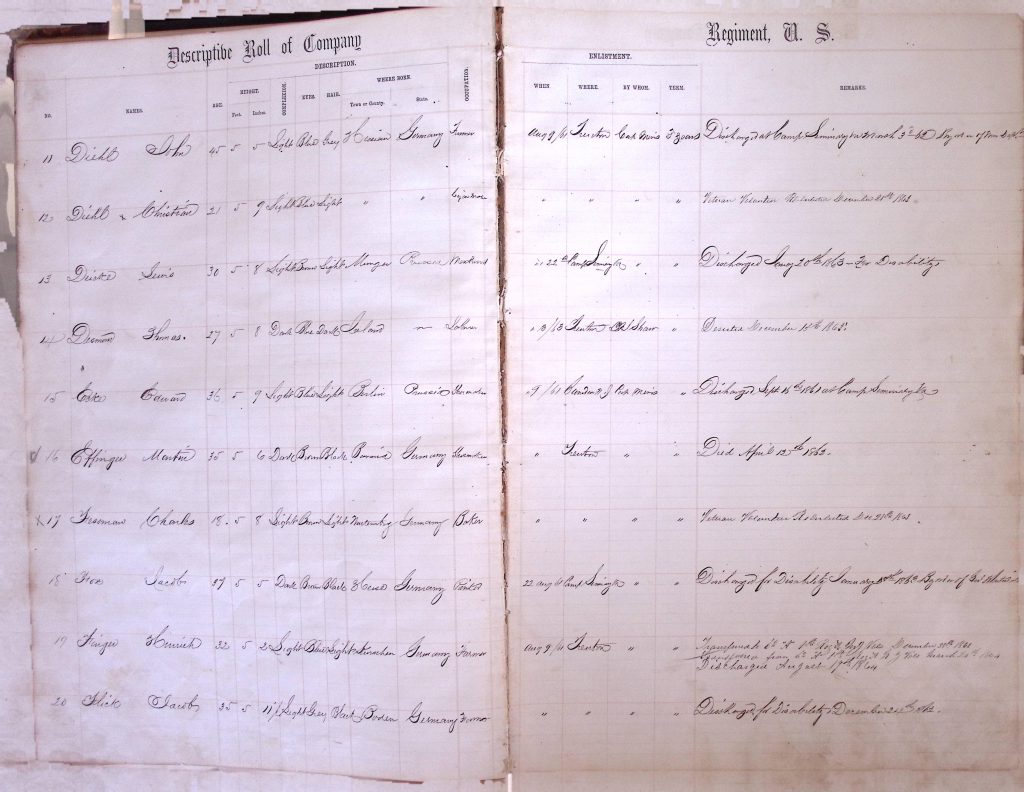
Over the past year or so, the Research Arsenal has been digitizing regimental books from Records Group 94 at the National Archives and adding them to our searchable database. But for those who many not be familiar with Records Group 94 and its contents, we thought it might be wise to put a bit of a primer out on it.
Understanding National Archives Record Group 94: A Treasure Trove for Civil War Research
For anyone researching the American Civil War, few collections at the National Archives are as important as Record Group 94 (RG 94), the Records of the Adjutant General’s Office. This massive collection contains millions of pages of military records created and maintained by the U.S. Army between the Revolutionary War era and World War I. For Civil War historians, genealogists, and descendants of Union soldiers, RG 94 is one of the most valuable sources available because it preserves the administrative records that documented the service of volunteer soldiers and military units throughout the war.
The Adjutant General’s Office served as the Army’s central recordkeeping agency. It was responsible for maintaining personnel records, recording military orders, collecting reports from units in the field, compiling returns, and preserving information about officers and enlisted men. As a result, Record Group 94 contains an enormous range of documents relating to the Civil War and the soldiers who fought in it. Today, it remains one of the primary collections used by researchers seeking to reconstruct military service histories.
What Is Record Group 94?
Record Group 94 encompasses the records of the Adjutant General’s Office from the late eighteenth century through 1917. The collection includes correspondence, orders, muster rolls, returns, personnel records, registers, indexes, and numerous specialized record series created by the War Department. The National Archives estimates that the record group contains more than 137 million pages of textual records, making it one of the largest military collections in federal custody.
While the collection covers many periods of American military history, Civil War researchers most often use the portions relating to volunteer organizations raised by the states for federal service between 1861 and 1865. These records provide both individual soldier information and detailed records concerning entire regiments and companies.
Regimental Descriptive Books
One of the lesser-known but extraordinarily useful record series within RG 94 is the collection of Regimental Descriptive Books and Company Descriptive Books.
These books were maintained by regimental adjutants and contain personal information about soldiers when they entered service. Researchers can often find details not available in the CMSRs.
Information commonly recorded includes:
- Age at enlistment
- Place of birth
- Occupation
- Height
- Eye color
- Hair color
- Complexion
- Date and place of enlistment
- Name of recruiting officer
- Remarks concerning service, transfers, desertion, death, or reenlistment
These books effectively provide a physical and biographical snapshot of a soldier at the time he entered the army. Modern historical databases and demographic studies of Civil War soldiers have relied heavily on these records.
Muster Rolls and Muster-In/Muster-Out Books
Muster rolls form the backbone of Civil War military recordkeeping.
Every company periodically submitted rolls listing the soldiers assigned to the unit and noting their status. These records documented whether a soldier was present for duty, absent, hospitalized, on detached service, captured, wounded, or deceased.
Researchers can often trace a soldier’s wartime experience through consecutive muster rolls. They may reveal:
- Dates of service
- Temporary absences
- Transfers
- Medical issues
- Promotions and reductions in rank
- Deaths during service
Muster-in and muster-out rolls additionally record the formal entry and exit of soldiers from federal service. These records served as the primary source material later used to create the Compiled Military Service Records.
Returns and Morning Reports
Another important category consists of military returns and reports.
Regiments, posts, and departments regularly submitted returns that summarized their condition and strength. Morning reports recorded the daily status of soldiers in a company or regiment.
These records may reveal:
- Number of men present for duty
- Sick soldiers
- Soldiers absent on leave
- Prisoners of war
- Casualty figures
- Unit locations
- Changes in command
For researchers interested in reconstructing a unit’s activities rather than focusing on a single soldier, returns and reports can provide a detailed picture of day-to-day military operations.
Letters, Orders, Registers, and Correspondence
RG 94 also contains extensive correspondence series created by the Adjutant General’s Office.
The collection includes:
- Letters received
- Letters sent
- Registers of correspondence
- Telegrams
- Administrative reports
- Orders and circulars
These records can be especially useful when researching officers, disciplinary matters, promotions, resignations, courts-martial, recruiting efforts, or unusual service situations. The accompanying registers and indexes frequently allow researchers to locate individual pieces of correspondence concerning specific soldiers or military units.
Why Record Group 94 Matters
Record Group 94 remains one of the most important collections for Civil War research because it bridges the gap between individual soldiers and the larger military organizations in which they served. The records document not only who served, but also where they served, how they served, and what happened to them during their military careers.
A researcher studying a Union soldier can often use RG 94 to reconstruct an entire military history—from enlistment and physical description, through battles, hospitalizations, and promotions, all the way to discharge. Likewise, researchers studying a regiment can use muster rolls, returns, and Record of Events books to trace the unit’s movements and activities throughout the war.
More than 160 years after the Civil War, the records preserved in Record Group 94 continue to serve as one of the foundational sources for understanding the experiences of Union soldiers and the administrative machinery that supported the Union Army.
How to Access These Sources
The Research Arsenal currently has over 122,000 pages of Records Group 94 material online. These include a variety of books such as Regimental Descriptive books, Morning Reports, Letter Books and more. An important thing to remember is that the amount of information available for each regiment can vary wildly. Some regiments may have a nearly complete record of service, while others may only have a few books available at the National Archives. Presumably, the missing volumes have been lost or were perhaps never donated to the National Archives to begin with. Using the Research Arsenal to access the records saves you a potentially costly trip to Washington D.C. and is currently the only online database with these records available.
Visit the Research Arsenal, click on “Search NARA Records” then select “RG94” and then select the regiment of your choice from the drop-down menus. If the regiment you are looking for is not listed, then it likely has not been digitized yet. If you’d like to sponsor a regiment you can do so via the link here: https://www.11thovc.com/shop-2
For More Information on Records Group 94:
National Archives. “Record Group 94: Records of the Adjutant General’s Office.” https://www.archives.gov/findingaid/stat/discovery/94
National Archives. “Records of the Adjutant General’s Office, 1780’s–1917 (Record Group 94).” https://www.archives.gov/research/guide-fed-records/groups/094.html
National Archives. “Pre-1917 Army Records at the National Archives.” https://www.archives.gov/research/military/army/pre-ww1
National Archives. “Civil War Records: Basic Research Sources.” https://www.archives.gov/research/military/civil-war/resources
National Archives. “An Overview of Records at the National Archives Relating to Military Service.” https://www.archives.gov/publications/prologue/2002/fall/military-records-overview.html
National Bureau of Economic Research. “Union Army Data: Regimental Record.” https://www.nber.org/programs-projects/projects-and-centers/union-army-data/union-army-data-regimental-record
