
RG 94 Spotlight: 21st Illinois Infantry
The Research Arsenal is proud to be digitizing and adding historical records of Civil War regiments held at the National Archives to our online database so that researchers and historians can access material that previously required a trip to Washington D.C. The 21st Illinois Infantry is one of the many regiments that has been added to our database.
The 21st Illinois Infantry: From Grant’s First Command to Victory in the Western Theater
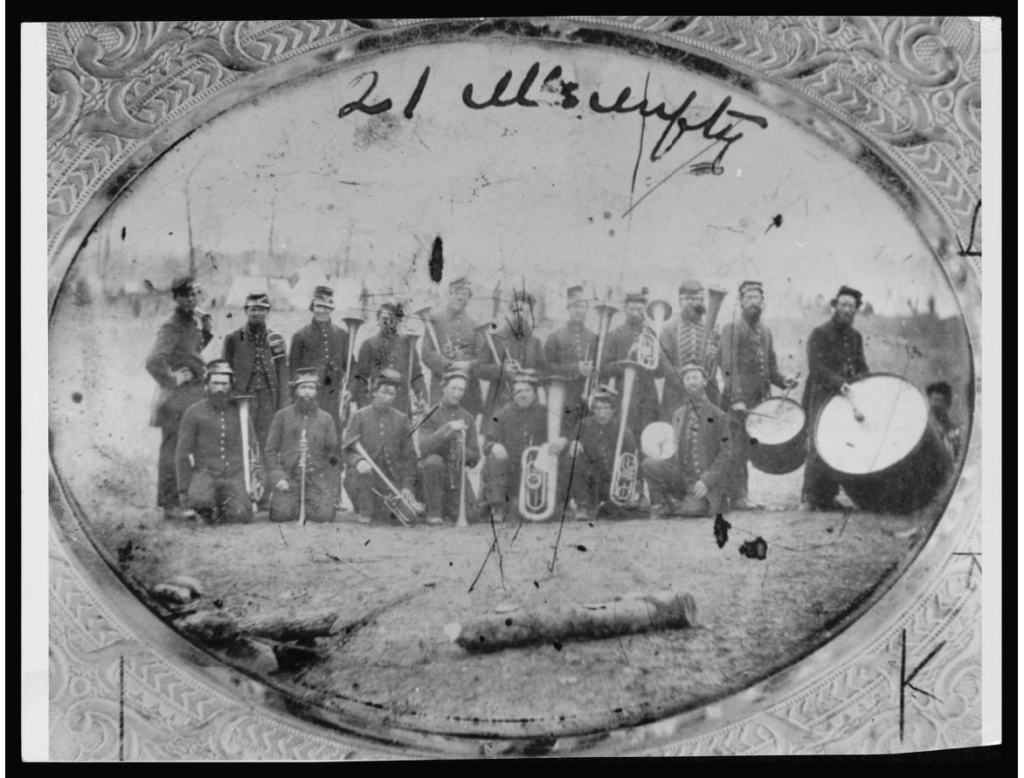
When the Civil War erupted in the spring of 1861, thousands of Illinois men answered President Abraham Lincoln’s call for volunteers. Among them was the 21st Illinois Volunteer Infantry, a regiment that would earn an enviable reputation for discipline and courage while serving in nearly every major campaign of the Western Theater. During four years of war, the regiment marched from the rugged hills of southeastern Missouri to the streets of Atlanta, fought in some of the conflict’s bloodiest battles, and finished its service occupying Texas after the Confederacy’s collapse.
Perhaps no aspect of the regiment’s history is more notable than its connection to Ulysses S. Grant, who took command of the 21st Illinois before becoming one of the Union’s greatest generals. Yet the regiment’s true story is found in the letters of the ordinary soldiers who endured disease, exhausting marches, fierce combat, and years away from home while remaining committed to preserving the Union.
A Regiment Takes Shape
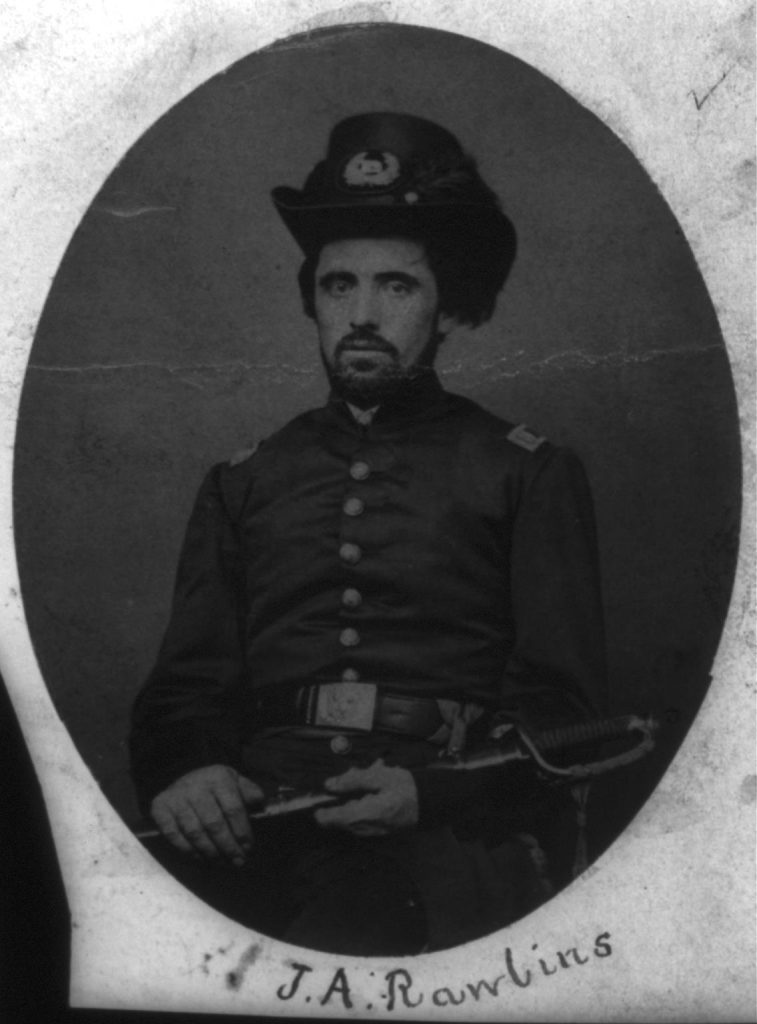
The 21st Illinois Infantry was organized at Mattoon and mustered into Federal service on June 13, 1861, for a three-year enlistment. Like many volunteer regiments raised during the war’s opening months, the men came from farming communities and small towns throughout central Illinois. Enthusiasm for enlistment was abundant, but military discipline was another matter entirely.
When Captain Ulysses S. Grant resigned from the regular army in 1854, few would have predicted his future prominence. Re-entering military service in 1861, he was appointed colonel of the 21st Illinois on June 15. He later recalled finding a regiment that possessed courage but little order. Rather than attempting to win popularity, Grant immediately imposed strict discipline, drilling the men relentlessly and insisting upon obedience.
The transformation was dramatic. The same regiment that had once been considered unruly soon developed into one of the dependable infantry organizations of the Western armies. Grant’s brief tenure with the 21st Illinois proved equally significant for his own career. Within weeks he received promotion to brigadier general, beginning the remarkable rise that would eventually carry him to command all Union armies.
Although Grant departed early in the regiment’s service, the standards he established remained throughout the war.
Learning the Hard Lessons of War in Missouri
The regiment’s first campaigns took place in southeastern Missouri, where Confederate forces threatened Union control of the region. Rather than immediately participating in grand battles, the men learned soldiering through long marches, difficult weather, and scattered engagements against Confederate forces.
Winter campaigning tested the volunteers as much as enemy fire. While stationed at Camp Ironton in January 1862, Private Stephen Perry Freeman of Company H found himself too ill to accompany his regiment on an expedition against Confederate troops near Greenville. Writing home to Lydia Waller, he described both his disappointment and the hardships facing his comrades:
“The regiment nearly all left here today on a march of 20 days—all that was able to go—and I was one reported not able to stand the trip. But it is the first time I have ever failed since I left home.”
Freeman understood exactly what the regiment faced. Missouri’s winter offered little comfort to soldiers living in tents:
“The weather here is very bad. It snowed here today all day. The snow is six or seven inches deep and very muddy also. The Boys is going to have a very hard tramp of it this time.”
His letter also reveals another reality of Civil War service—loneliness. With the regiment gone, camp suddenly became quiet:
“Times here tonight appears very dull. It puts me in mind of old times when I was a boy and my Mother would go away and leave me to take care of the house.”
Like thousands of Union soldiers, Freeman longed for letters from family and friends almost as much as he longed for home itself. The regiment continued operations throughout Missouri, participating in the campaign that secured southeastern Missouri and helped open the Mississippi Valley to later Union advances.
Into the Heart of the Western Theater
During 1862 the 21st Illinois became part of the expanding Union offensive through the Western Theater. The regiment participated in operations against New Madrid, the advance on Corinth, and the hard-fought Battle of Perryville in Kentucky.
Letters written by Lieutenant Charles Howe vividly describe the exhausting rhythm of campaigning. His correspondence reflects the constant marches, uncertain supplies, and ever-present possibility of battle that defined life in the Army of the Cumberland. Rather than experiencing continuous combat, soldiers often spent weeks marching before suddenly finding themselves under fire with little warning. The regiment’s greatest trial of 1862 came at the Battle of Stones River near Murfreesboro, Tennessee. Fighting erupted on December 31, and the 21st Illinois was heavily engaged during one of the war’s bloodiest battles.
Among those who never returned home was Stephen Perry Freeman. Less than a year after writing hopefully from Camp Ironton, he was killed during the battle on December 30, 1862. His younger brother, Harmon, continued serving with the regiment until he was captured and later died in Confederate captivity at Danville, Virginia, in February 1864. Their story illustrates the tremendous sacrifices made by families throughout Illinois as the war dragged on.
Veterans Forged by Battle
By 1863 the 21st Illinois was no longer a regiment of inexperienced volunteers. Years of campaigning had transformed the survivors into seasoned veterans. They fought at Chickamauga, one of the Civil War’s fiercest battles, where Union forces suffered a costly defeat before later recovering during the Chattanooga Campaign.
The regiment’s discipline, first instilled by Grant, proved invaluable during these desperate engagements. Veterans who had survived Missouri, Corinth, Perryville, and Stones River understood how to maintain formation under fire and support one another amid the confusion of battle. The hardships of continual campaigning strengthened the bonds between the soldiers. Those relationships became one of the defining characteristics of Civil War regiments, where shared danger often created friendships lasting a lifetime. Many members of the 21st Illinois reenlisted as Veteran Volunteers, demonstrating their commitment despite years of hardship and loss.
Marching with Sherman to Atlanta
The regiment entered perhaps its most famous campaign in the spring of 1864 as part of General William T. Sherman’s advance toward Atlanta. For more than four months, the soldiers marched almost daily while fighting a series of engagements across northern Georgia.
Private George W. Thompson of Company H wrote home shortly after Atlanta fell, providing one of the best firsthand accounts of the regiment’s experience. Reflecting on more than three years together, he wrote:
“All the soldiers that belong to our company seems as brothers to me for we have been together so long that I hate to part with one of them.”
That simple observation captures the remarkable camaraderie that developed among veteran soldiers after years of shared danger.
Thompson also expressed the fierce patriotism that motivated many Union volunteers. Rejecting Northern opponents of the war, he declared:
“I am not a butternut nor a copperhead. I am for the Union and the Constitution… and I will take my musket and go on the battlefield and fight the rebels until the sun ceases to rise before I will give up our country.”
His words reflected the determination of veterans who believed the enormous sacrifices already made demanded complete victory. Rather than offering only patriotic sentiment, Thompson carefully described Sherman’s movements during the final operations against Atlanta. He explained how Union forces abandoned their original lines, marched south to cut Confederate railroads, and systematically destroyed vital transportation routes:
“We have taken Atlanta without getting many men killed… we struck the railroad 16 miles below Atlanta and destroyed 30 miles of the railroad.”
His account continued with the fighting around Jonesboro, where Confederate General John Bell Hood attempted to save his remaining rail connections:
“We formed a line of battle and then fighting began. It lasted till after night when they fell back… we followed them up until we heard that Atlanta was evacuated.”
The capture of Atlanta became one of the Union’s greatest strategic victories, boosting Northern morale and helping secure Abraham Lincoln’s reelection. After months of continuous campaigning, Thompson admitted how exhausted the regiment had become:
“We have been on the campaign so long that we are all worn out so we will have to rest for one month before we will be able to march again.”
Even victorious soldiers paid a tremendous physical price for Sherman’s relentless offensive.
Final Victories and the War’s End
The fall of Atlanta did not end the regiment’s service. The 21st Illinois continued campaigning during the Franklin-Nashville Campaign, helping destroy Hood’s Army of Tennessee in late 1864. The victories at Franklin and Nashville effectively eliminated the Confederacy’s last major offensive force in the Western Theater. After Confederate resistance collapsed in 1865, the regiment was sent to Texas for occupation duty. Like many veteran organizations, its final months consisted not of dramatic battles but of maintaining order as the nation slowly transitioned from war to peace. The 21st Illinois was finally mustered out in December 1865 after more than four years of service.
A Lasting Legacy
The history of the 21st Illinois Volunteer Infantry mirrors the larger story of the Union Army in the West. Organized during the first rush of enthusiasm in 1861, the regiment matured under the demanding leadership of Ulysses S. Grant before proving itself in campaigns stretching from Missouri to Georgia.
Its soldiers endured disease, brutal marches, bitter winter camps, and some of the war’s hardest fighting. Many never returned home, including Stephen Freeman, whose quiet letter from Camp Ironton speaks poignantly of homesickness and uncertainty only months before his death. Others, like George Thompson, survived long enough to witness Atlanta’s capture and express confidence that the Union would ultimately prevail.
Their letters remind us that regimental histories are more than lists of battles and casualty figures. They are stories of ordinary citizens who became soldiers, formed lifelong friendships, sacrificed for causes they believed in, and helped preserve the United States during its greatest national crisis.
When Ulysses S. Grant first assumed command of the 21st Illinois, he inherited a regiment that required discipline and direction. By the war’s end, it had become a veteran organization whose record reflected the determination, endurance, and courage of the citizen-soldiers who served within its ranks.
Sources
The Research Arsenal is proud to hold 1,263 digital scans of the 21st Illinois Infantry’s regimental history on its database. These consist of just nearly 1,250 pages of material from the National Archives Records Group 94 files. These include Regimental Descriptive books, Order books, and Morning Reports. Visit the Research Arsenal, click on “Search NARA Records” then select “RG94” and “21st Illinois Infantry” from the drop-down menus. In addition, the Research Arsenal contains letters, and other forms and documents relating to the 21st Illinois Infantry.
Civil War Index. 21st Illinois Infantry.
https://civilwarindex.com/armyil/21st_il_infantry.html
Dan Masters’ Civil War Chronicles. The Desperate Day Before Us: The 21st Illinois at Chickamauga. https://dan-masters-civil-war.blogspot.com/2021/06/the-desperate-day-before-us-21st.html
Illinois GenWeb. 21st Illinois Volunteer Infantry History.
https://illinoisgenweb.org/civilwar/history/021.html
National Park Service. Charles Howe Letter Transcriptions.
https://www.nps.gov/stri/learn/historyculture/upload/Howe_Charles_letter_Transcription_508.pdf
Research Arsenal. 1862 STEPHEN PERRY FREEMAN TO LYDIA JANE WALLER. https://app.researcharsenal.com/imageSingleView/14657
Research Arsenal. 1864 GEORGE W. THOMPSON TO LYDIA JANE WALLER. https://app.researcharsenal.com/imageSingleView/63663
Spared & Shared. 21st Illinois Infantry Collection.
https://sparedshared23.com/category/21st-illinois-infantry/
