
RG 94 Spotlight: The 2nd Maine Infantry in Two Letters
RG 94 Spotlight: The 2nd Maine Infantry in Two Letters
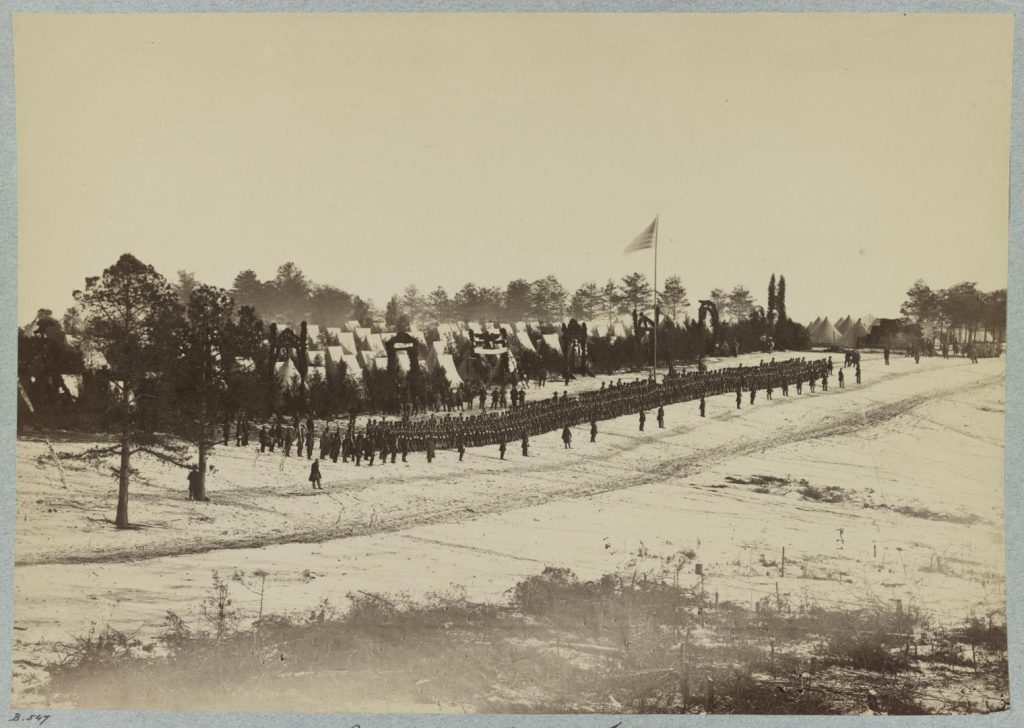
The Research Arsenal is proud to be digitizing and adding historical records of Civil War regiments held at the National Archives to our online database so that researchers and historians can access material that previously required a trip to Washington D.C. The 2nd Maine Infantry is one of the many regiments that has been added to our database.
When the Civil War erupted in April 1861, the response in Maine was immediate. In Bangor and communities throughout the Penobscot Valley, men who had been lumbermen, mill workers, merchants, firefighters, students, and members of local militia companies suddenly found themselves preparing for war. Among the first Maine units to answer the call was the 2nd Maine Volunteer Infantry.
Although numbered the second Maine regiment, it was actually the first Maine regiment to leave the state for the front. Organized at Bangor and mustered into Federal service on May 28, 1861, the regiment would spend the next two years campaigning in Virginia and Maryland. Its soldiers fought at First Bull Run, Yorktown, Hanover Court House, Gaines’ Mill, Malvern Hill, Second Bull Run, Antietam, Fredericksburg, and Chancellorsville. By the time the regiment returned to Maine in 1863, it had been transformed by two years of campaigning and combat.
The story of the 2nd Maine, however, is more than a list of battles. The letters written by its soldiers reveal something of what it meant to leave Maine, enter the Army of the Potomac, and face the uncertainty of war.
Building the “Bangor Regiment”
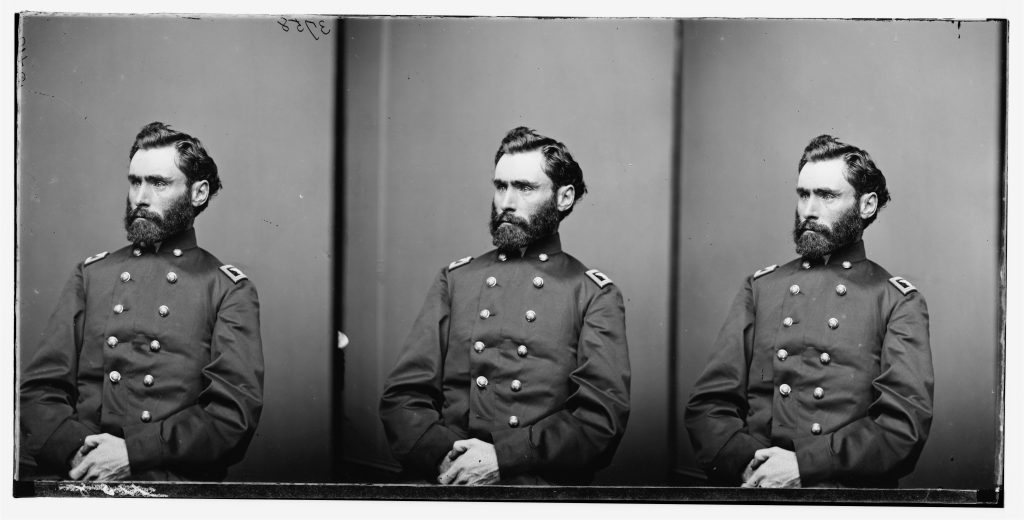
The 2nd Maine grew out of both Maine’s existing militia organizations and the wave of patriotic volunteering that followed Fort Sumter. Before the war, Maine’s militia system had declined considerably. In 1860, the state’s adjutant general reported only 36 organized militia companies, and even many of those were poorly maintained. Yet when the crisis came, those surviving organizations provided an important foundation for the new regiment.
Bangor, a prosperous lumber port on the Penobscot River, supplied much of the regiment. Companies were formed from existing organizations such as the Bangor Light Infantry and Grattan Guards, while companies were also recruited from Brewer, Castine, Milo, Old Town, and surrounding communities. The men came from a wide variety of occupations. Firefighters known as the “Ex-Tigers” became Company G, while lumbermen, river drivers, mill workers, mariners, and other working men filled the ranks.
The regiment’s commander was Colonel Charles D. Jameson, a lumberman from Stillwater who had previous militia experience. Among its officers was Augustus Choate Hamlin, nephew of Vice President Hannibal Hamlin, who served as assistant surgeon and later surgeon.
The enthusiasm of the people of Bangor was unmistakable. On May 14, 1861, the regiment marched from Camp Washburn to the railroad station through streets crowded with civilians. The soldiers received a silk American flag from the women of Bangor before boarding the trains. The departure took place amid rain, cheers, cannon fire, and the whistles of locomotives.
For many of these men, it was the beginning of an experience they could scarcely have imagined.
“I am bound that my parents shall have enough to console them”
One of the most revealing letters from the 2nd Maine was written from Alexandria, Virginia, on March 16, 1862. The writer, whose identity is not presently established, was already confronting the possibility that his next letter home might never be written.
Writing to his sister, he described the recent movements of the regiment through Virginia. The men had marched ten miles through deep mud from Hall’s Hill to Fairfax and then another fifteen miles through rain to Alexandria. The weather had left the soldiers soaked, and many were forced to spend the night lying on cold, wet ground. Yet the hardships of campaigning were not the central concern of the letter. The writer was thinking about death.
He told his sister:
“Still, ere you get this, I may be prostrated on some Southern plain. But if so, I am bound that my parents shall have enough to console them—namely, that I fall doing a soldier’s duty.”
The statement provides a remarkable glimpse into the mindset of at least one young Maine soldier. He understood that the coming campaign might kill him, but he also believed that dying in the performance of his duty would give meaning to his death. The writer had little doubt that combat was approaching. The regiment was preparing to embark for Fortress Monroe and then proceed farther south. He expected “some hard fighting” and wrote that he was “ready and willing to do my part of it.” His letter also reveals the complicated emotions surrounding enlistment. His sister apparently wished that he had remained home with friends and family. His response was emphatic. He could not bear the thought of living quietly while other men fought.
“It would be utterly impossible for one of my nature & ambition to attend school or remain in quiet life while others were doing the fighting for me.”
His language was youthful, idealistic, and uncompromising. He went so far as to say that if he knew he would be among those killed, he would still refuse the opportunity to return home.
“I would spurn with contempt the offer & rush forward manfully & die like a hero rather than live a coward.”
Such words should not be treated as representative of every soldier in the regiment. The Civil War produced a wide range of attitudes toward duty, patriotism, fear, and military service. But this letter captures the extraordinary conviction with which some volunteers entered the war.
Thomas Foster: Soldiering Before the Fighting Began
Another letter, written from Camp Barnes at Hall’s Hill on October 27, 1861, offers a very different but equally valuable view of life in the 2nd Maine. The writer was almost certainly Thomas Foster, who had enlisted on May 28, 1861, as first sergeant of Company E. Foster was promoted to second lieutenant in August, first lieutenant in July 1862, and captain in March 1863. He would eventually leave the 2nd Maine and later serve in the 1st Maine Heavy Artillery, where he was wounded during the fighting near Petersburg in June 1864.
In October 1861, however, Foster was still a relatively junior officer trying to anticipate the regiment’s next movement. His letter begins with practical matters. He discusses blankets, his missing sword, and even the possibility of purchasing a horse. He wanted a horse that was “steady,” but also fast enough to “canter, gallop, & leap if necessary.” The mundane details are striking because they exist alongside the knowledge that the regiment might receive marching orders at any moment. Foster explained that the soldiers repeatedly received orders to prepare two days’ rations and get everything ready to move, only to have the anticipated movement fail to materialize. “We are liable to start at anytime,” Foster wrote, reflecting the uncertainty that characterized military life before the Peninsula Campaign.
He also described a grand review attended by General George B. McClellan and other officers. Thousands of soldiers marched past in review before participating in battlefield maneuvers. Foster admitted that the day’s activities left the men tired, but he considered the exercise successful.
The letter demonstrates that the soldiers’ lives consisted of much more than fighting. Drill, inspections, equipment, horses, food, weather, correspondence, and rumors about future movements occupied much of their time. And yet beneath all of these ordinary concerns was the expectation that eventually the waiting would end.
From Bull Run to the Peninsula
The 2nd Maine joined the Army of Northeastern Virginia and fought at First Bull Run on July 21, 1861. The regiment was committed to the fighting around Henry House Hill and suffered heavily. Thirteen men were killed, 24 wounded, and 118 initially reported missing, although many of those missing eventually returned to the regiment. The regiment’s performance earned strong praise. Brigadier General Erasmus D. Keyes later wrote that the gallantry of the 2nd Maine in charging toward the Confederate artillery and infantry was, in his opinion, “never surpassed.”
In 1862 the regiment participated in the Peninsula Campaign, fighting at Yorktown, Hanover Court House, Gaines’ Mill, and Malvern Hill. It then returned to northern Virginia and fought at Second Bull Run. By July 1862, the regiment’s effective strength had fallen to only 257 rifles. After Second Bull Run, just 137 men remained able to carry arms.
The numbers tell a story that words alone cannot. A regiment that had marched proudly out of Bangor had been reduced by battle, disease, wounds, captivity, and other losses. The survivors continued on to Antietam and Fredericksburg before taking part in the Chancellorsville Campaign in May 1863. The Maine State Library’s collection of official correspondence provides an additional window into this period, documenting everything from casualties and deaths to promotions, medical appointments, recruiting efforts, and soldiers who had been captured and paroled.
The Long Road Home
For the 2nd Maine, the end came in 1863—not because the regiment had ceased to be useful, but because most of its original members had enlisted for two years. This created a difficult situation. Some men had enlisted for three years, while others believed they were committing themselves for only two. As their original enlistments expired, the two-year soldiers refused to remain.
By May 1863, only about 275 of the roughly 750 men who had originally departed Bangor were returning home. Death, disease, wounds, captivity, desertion, and medical discharge had taken the rest. On May 19, the regiment held its final dress parade on Virginia soil. The next morning, the men began their journey home. Their comrades in the 18th Massachusetts offered to escort them to the railroad, a gesture that demonstrated the bonds forged through nearly two years of campaigning. William T. Livermore of the 20th Maine watched the departure and later recalled how the soldiers shook hands with the departing men. They cheered one another until the 2nd Maine left for home. About 120 of the 2nd Maine soldiers found themselves transferred into the 20th Maine Infantry just before participating in the Battle of Gettsyburg.
For those who returned to Maine, the homecoming in Bangor was every bit as emotional as the departure two years earlier. The city asked businesses to close during the reception, and an immense crowd filled Broadway to welcome the returning soldiers.
Remembering the 2nd Maine
The 2nd Maine Infantry’s story illustrates the enormous transformation experienced by Civil War volunteers. They left Maine amid flags, cheering crowds, speeches, and patriotic enthusiasm. Within months, they had experienced the reality of battle. Over the following two years, they endured campaigning, disease, wounds, death, exhaustion, uncertainty, and the loss of hundreds of comrades. The letters of men such as Thomas Foster and the unidentified soldier writing from Alexandria make that transformation particularly vivid. Foster’s October 1861 letter shows a soldier concerned with blankets, horses, drills, and rumors of movement. Five months later, another 2nd Maine soldier was writing to his sister about the possibility of dying on a “Southern plain.”
The regiment’s official record can tell us where the 2nd Maine fought and how many men were lost. The soldiers’ correspondence tells us something more personal: what it felt like to be one of those men. The 2nd Maine Infantry left Maine first, fought through some of the Army of the Potomac’s earliest campaigns, and returned home after two years of service. Its veterans carried with them memories of friends who had not survived, battlefields they would never forget, and experiences that permanently separated their wartime lives from the world they had known before 1861. Their story survives not only in regimental histories and casualty lists, but in the words they themselves left behind.
Sources
The Research Arsenal is proud to hold 105 digital scans of the 2nd Maine Infantry’s regimental history on its database. These consist of 89 pages of material from the National Archives Records Group 94 files. This comprises the only book available, which is the Descriptive Book for Companies B, C, H and K. Visit the Research Arsenal, click on “Search NARA Records” then select “RG94” and “12nd Maine Infantry” from the drop-down menus. In addition, the Research Arsenal contains letters, photographs, and other forms and documents relating to the 2nd Maine Infantry.
- Brian F. Swartz, “Johnny Comes Marching Home: the 2nd Maine Infantry returns, part I,” Maine at War, July 15, 2026. (Maine at War)
- Ryan Quint, “Recruiting the Regiment: The 2nd Maine Volunteer Infantry,” Emerging Civil War, June 4, 2021. (Emerging Civil War)
- Brian F. Swartz, “Recruiting The Regiment: The Militia & The 2nd Maine Infantry,” Emerging Civil War, June 8, 2021. (Emerging Civil War)
- “2nd Maine Infantry Regiment,” Wikipedia, accessed September 2026. (Wikipedia)
- Maine State Library, “2nd Maine Regiment | Adjutant General Correspondence.” (DigitalMaine)
- Research Arsenal, transcribed correspondence of the 2nd Maine Infantry, including the March 16, 1862 letter from Alexandria and Thomas Foster’s October 27, 1861 letter from Camp Barnes, Hall’s Hill, Virginia.
- William E. S. Whitman and Charles H. True, Maine in the War for the Union: A History of the Part Borne by Maine Troops in the Suppression of the American Rebellion (1865).
- James H. Mundy, Second to None: The Story of the 2d Maine Volunteer Infantry: “The Bangor Regiment” (1992).
