
RG 94 Spotlight: 83rd Ohio Infantry
The 83rd Ohio Infantry: The Greyhound Regiment
The Research Arsenal is proud to be digitizing and adding historical records of Civil War regiments held at the National Archives to our online database so that researchers and historians can access material that previously required a trip to Washington D.C. The 83rd Ohio Infantry is one of the many regiments that has been added to our database.
Organized at Camp Dennison, near Cincinnati, Ohio, in August 1862, the 83rd Ohio Volunteer Infantry entered Federal service at a time when the Union was struggling to maintain its military momentum. Commanded by Colonel Frederick W. Moore, the regiment was mustered for three years of service and would eventually participate in some of the most important campaigns in the Western Theater, including the capture of Arkansas Post, the Vicksburg Campaign, the Red River Campaign, and the operations against Mobile, Alabama. Known as the “Greyhound Regiment,” the 83rd Ohio developed a reputation for marching ability and endurance that its members carried with pride throughout the war.
Organization and Early Service
The regiment began its military career at Camp Dennison, where its companies were assembled and organized. Its initial service came closer to home than many of its members might have anticipated. On September 3, 1862, the 83rd moved into Kentucky in response to Confederate General Edmund Kirby Smith’s threatened advance toward Cincinnati. The regiment participated in the defense of the city and subsequently undertook expeditions through Kentucky, including a movement to Cynthiana on September 18.
It was during its Kentucky service that the regiment acquired the nickname that would follow it throughout the war. During one march, the 83rd reportedly outpaced the other regiments in its brigade, leaving them behind despite carrying full marching equipment. The nickname “Greyhounds” was initially bestowed without much affection, but the men eventually embraced it. The name became a source of regimental pride and was later commemorated on the regiment’s monument at Vicksburg.
In October 1862, the regiment received a new set of regimental colors, purchased by the Cincinnati, Hamilton, and Dayton Railroad Company. These colors would soon become an important part of the regiment’s history. After moving to Louisville, the 83rd departed for Memphis, Tennessee, arriving on November 23, 1862. Its service was now taking it into the heart of the Mississippi River campaign, where General William T. Sherman was preparing an expedition against the Confederate defenses protecting Vicksburg.
Chickasaw Bayou: The Regiment’s First Taste of War
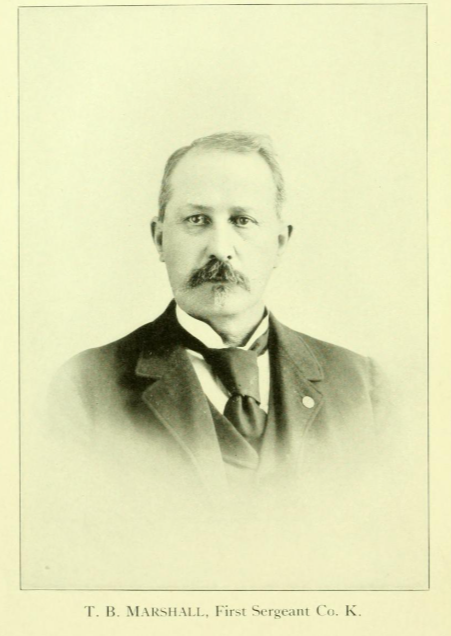
In December 1862, the 83rd Ohio joined Sherman’s Yazoo Expedition, an attempt to approach Vicksburg from the north and attack the Confederate defenses along the Mississippi River. The regiment participated in the operations around Chickasaw Bayou from December 26 through 31. The experience proved to be a difficult introduction to combat. The men faced Confederate defenses situated on commanding ground, with difficult terrain and waterlogged approaches making an advance particularly hazardous. T.B. Marshall’s regimental history recalled the miserable conditions:
“This Chickasaw Bayou expedition was the first taste of real war which we had experienced, and it was a very bitter one. It seemed to rain nearly all the time, and there was not a spot of dry ground to lie on. We were not allowed to build fires, as the smoke would betray our position.”
The men improvised small fires, sometimes no larger than a tin cup, in order to make coffee. The combination of rain, mud, exposure, and enemy fire made the expedition a miserable experience. The Confederate defenses proved too strong, and Sherman’s forces withdrew without accomplishing their objective. The defeat was particularly discouraging because the men had expected to find the Confederate defenses weakened by Grant’s operations elsewhere. Instead, they encountered a well-prepared enemy. The 83rd had experienced its first major engagement, and it would not have long to wait before being tested again.
Arkansas Post: A Break in the Clouds of Gloom
Following the withdrawal from Chickasaw Bayou, the 83rd Ohio embarked on another expedition, this time toward Arkansas Post and Fort Hindman. The movement began in early January 1863, with the regiment traveling aboard steamers through the waterways leading to the Arkansas River. The journey itself was an adventure. Fuel for the steamers was scarce, and soldiers were required to gather wood along the riverbanks to keep the boats moving. Marshall remembered the grim reminders of the war they encountered during this work:
“It was not always wood that demanded our care, for sometimes when we steamed away a mound or two of fresh earth was seen, silent witnesses of grief in some home.”
By January 11, the Federal forces had reached Fort Hindman, a Confederate stronghold on the Arkansas River. The attack initially met with resistance, and the 83rd Ohio found itself involved in some of the heaviest fighting of its young military career. During the afternoon assault, the regiment advanced against the Confederate position alongside the other units of its brigade. An initial repulse forced the Federal troops to fall back and reorganize. Orderly Sergeant Thomas B. Marshall later described the scene:
“There was no panic, nobody was scared, all wondering why we fell back.”
General A.J. Smith and his staff rode among the troops, attempting to restore order and prepare them for another advance. Marshall remembered Smith’s colorful language, observing that “for artistic and effective profanity, General A.J. Smith had no superior.”
The regiment reformed and moved forward again. Marshall continued:
“The fort was now in plain sight and the bullets were singing their songs as they flew both ways. We dropped to the ground, loaded, and fired as fast as we could, or when we could see something to shoot at, all the time edging towards the fort.”
The renewed assault succeeded, and Fort Hindman surrendered. The 83rd’s colors, which had been presented only a few months earlier, were badly damaged during the engagement, reportedly shot almost completely to pieces. For Marshall, the victory represented something more than the capture of a Confederate position. Following the discouragement of Chickasaw Bayou and the difficult winter campaign, Arkansas Post provided a much-needed boost to the Union soldiers’ morale. He later described the victory as the “first break in the great cloud of gloom which had settled over the land since the preceding summer.”
Young’s Point and the February 1863 Surgeon Situation
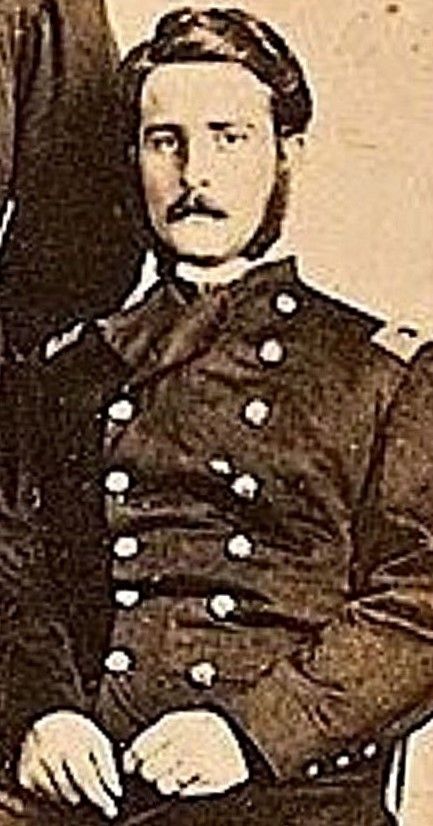
Following the capture of Arkansas Post, the 83rd Ohio moved to Young’s Point, Louisiana, where it remained through much of the winter and early spring of 1863. Conditions in camp were far from comfortable. The regiment was situated in a cotton field near the Mississippi River, where seepage from the river kept the ground perpetually soft. Marshall described the camp as an undesirable location, explaining that while some soldiers managed to obtain boards for their tent floors, most had little protection from the wet ground.
In early February, Major Stephen S. L’Hommedieu wrote at lengthy complaint on the state of the regiment’s medical department:
“At present we have no Surgeon whatever, the Surgeon is on duty at Division Head Qrs and is at present quite sick, the 1st Assistant Surgeon is present with the Regiment but he, also, is too sick to attend to duty and when he is well, he is totaly [sic] worthless, his ignorance of his profession is so manifest that an unprofessional man can detect it. In addition to this he, without actually getting drunk, keeps himself under the effect of liquor and I have every reason to believe, of Opium too, all the time.”
During February, the regiment also participated in expeditions toward Greenville, Mississippi, and Cypress Bend, Arkansas. These operations involved searching for Confederate forces and guerrillas operating along the river. The soldiers encountered difficult terrain, unfamiliar transportation, and occasional skirmishing. One particularly memorable episode involved infantry volunteers being called upon to ride mules alongside the cavalry. The animals were apparently not accustomed to being ridden, and the soldiers struggled to mount them while carrying their weapons. Marshall recalled:
“These mules had never been ridden but after several ineffectual attempts by the volunteers to get on their backs, they finally succeeded. With a gun strapped over the shoulder and no saddle —staying on after mounting was no small matter.” They spent the rest of the day in pursuit of the enemy and attempting to keep up with the cavalry, which was no easy feat. The soldiers struggled to dismount, mount, dismount, and mount their mules again and again, while the cavalry rushed on and left them behind. At sundown they reached the end of their ride to which Marshall wrote they were “very tired and I may say for the mule riders, very much afflicted.”
Marshall also shared this somewhat humorous story from the same raid:
“Another incident of this raid is related by Wm. H. Davis. We were sent to support the outpost with orders to make no fires. However, we found a house full of chickens, lots of yams, and a big kettle. The temptation was too great, and we soon had a roaring fire and spent the night in boiling chickens, putting the best pieces away and eating wings. When we were done, we had a blaze twenty feet high and it was not our fault we were not all shot.”
The Vicksburg Campaign
In the spring of 1863, the 83rd Ohio joined the operations that would ultimately lead to the capture of Vicksburg. The regiment crossed the Mississippi River with Grant’s forces and participated in the campaign that brought about the surrender of the Confederate stronghold on July 4. Its engagements included Port Gibson on May 1, Champion Hill on May 16, and Big Black River on May 17. The regiment also participated in the assaults against the Vicksburg defenses on May 19 and May 22 before settling into the long siege.
The fighting at Champion Hill was particularly significant. The engagement was one of the decisive battles of Grant’s campaign, and the Confederate defeat forced the Southern army back toward Vicksburg. The 83rd remained involved in the pursuit and subsequent siege operations. Marshall’s history provides details of the hardships of siege warfare, including the construction of defensive earthworks under enemy fire. Soldiers dug trenches and rifle pits, often working in exposed positions while Confederate sharpshooters watched for anyone who raised their heads above the protective earth.
The regimental history describes the limited protection afforded by the first trenches:
“All together from thirty to thirty-six inches was all the protection we had for the night’s work.”
The men continued to deepen and expand their positions, gradually improving their defenses while maintaining constant vigilance against enemy fire. The regiment remained at Vicksburg until the Confederate surrender on July 4, 1863. It subsequently participated in the siege of Jackson, Mississippi, before moving to Louisiana in August.
Louisiana and the Red River Campaign
The 83rd Ohio’s service continued in Louisiana, where it participated in the Teche Campaign and various operations throughout the region. Its duties included marches, guard assignments, and expeditions against Confederate forces. In November 1863, the regiment fought at Grand Coteau, Louisiana. The engagement resulted in casualties and the capture of a number of Union soldiers. Among those taken prisoner were members of the 83rd Ohio, some of whom would face months of captivity.
The following spring brought the regiment into the Red River Campaign, one of the most difficult and controversial operations of the war in the Trans-Mississippi region. Beginning in March 1864, Federal forces advanced into Louisiana with the objective of reaching Shreveport. The 83rd Ohio participated in the movement through the region, encountering difficult roads, swollen waterways, and increasingly challenging conditions. The regiment was involved in the fighting at Sabine Cross Roads on April 8 and the subsequent operations around Pleasant Hill. The Federal defeat at Sabine Cross Roads forced a retreat, and the soldiers endured a difficult withdrawal through the Louisiana countryside.
Marshall’s account describes the challenges of crossing the region’s waterways and the destruction of bridges. At one point, the regiment had to wait for the pioneer corps to construct a pontoon bridge using large wooden floats transported with the army. The Red River Campaign eventually ended without achieving its intended objectives. By May 22, the 83rd Ohio had reached Morganza Bend, bringing the expedition to a close.
Final Campaigns and Muster Out
The regiment continued serving in the Department of the Gulf through the remainder of 1864 and into 1865. Its duties included garrison and guard assignments, as well as participation in the operations against Mobile, Alabama. In April 1865, the 83rd Ohio participated in the campaign against the Confederate defenses at Spanish Fort and Fort Blakely. The capture of these positions helped bring about the fall of Mobile, one of the last major Confederate-held ports on the Gulf Coast.
By this point, the regiment had served in the field for nearly three years. It had experienced repeated campaigns, difficult marches, disease, casualties, and the loss of comrades. Its members had traveled through Kentucky, Tennessee, Mississippi, Arkansas, and Louisiana, eventually reaching Alabama and Texas. The 83rd Ohio was mustered out of service at Galveston, Texas, on July 24, 1865. The men returned to Camp Dennison, Ohio, where the regiment was formally discharged on August 10, 1865. Veterans and remaining recruits were transferred to the 48th Ohio Infantry Battalion.
Marshall described their return trip to Ohio:
“On reaching Cairo we found a train of cars waiting for us. What? Pullmans, did you say? You must think we were feather-bed soldiers even to hint at such a thing. Pullmans? Yes, box and stock cars with boards nailed across from side to side for seats, and into which we piled, not caring very much, nor thinking of anything better, only so we could get home. Some spread their blankets
on the floor under the seats, others did the same on the roof and managed during the long night to get a little sleep.
Leaving Cairo August 3rd, we reached Cincinnati about midnight of the 5th. As the train moved slowly through the city, first one and then another would drop off, and, trotting along with the train until he could get a good grip on his belongings, would jerk them off and disappear in the darkness. Those of us who lived at a distance remained until we reached the Little Miami Depot where
we were allowed to get the balance of the night’s sleep that was coming to us, from the pavement. It was none too soft, but we were too well used to hard beds to mind a little thing like that.
Then came Camp Dennison, our old barracks, the final muster out and the last pay; then followed the warm, heartfelt hand clasps, and the good-byes were said with wishes for future life and prosperity, and the hopes of often seeing one another. Soon the train was bearing us swiftly away from the spot which had witnessed our first and last experience as soldiers, and as we went we sang with lilting voices:
“Home, home, sweet sweet home; Be it ever so humble, there’s no place like Home.”
And so, into the voiceless past went the labors, the trials, and the memories of the Eighty-Third Ohio Volunteer Infantry.
‘ntion battalion, Shoulder-r-r arms, In two ranks, right-face. Arms port, Break ranks — march. Taps.”
The Legacy of the Greyhound Regiment
The 83rd Ohio Volunteer Infantry had entered service in the summer of 1862 as a newly organized regiment of Ohio volunteers. By the time it returned home in 1865, its members had participated in some of the most important military operations of the Western Theater. Its history was preserved in 1912 through the publication of History of the Eighty-Third Ohio Volunteer Infantry, compiled by First Sergeant Thomas B. Marshall and published by the regiment’s veterans’ association. The book preserved not only the regiment’s movements and engagements but also the recollections of the men who experienced them. Marshall’s narrative is particularly valuable because it captures the everyday realities of military service: the discomfort of wet camps, the exhaustion of long marches, the uncertainty of military operations, and the humor soldiers found even in difficult circumstances.
The regiment’s nickname, the Greyhounds, became a fitting symbol of its service. What began as a reference to its remarkable marching speed became a badge of honor, representing the endurance and determination of the men who served in its ranks. Their story was one of perseverance through some of the most demanding campaigns of the Civil War, and their service remains an important part of Ohio’s military history.
Sources
The Research Arsenal is proud to hold 1,441 digital scans of the 83rd Ohio Infantry’s regimental history on its database. These mostly consist of 1,429 pages of material from the National Archives Records Group 94 files. This comprises Descriptive books, Descriptive books by Companies, Regimental Letter, Order & Guard Report book, Morning Reports, and Order books. Visit the Research Arsenal, click on “Search NARA Records” then select “RG94” and “83rd Ohio Infantry” from the drop-down menus. In addition, the Research Arsenal contains letters, and other forms and documents relating to the 83rd Ohio Infantry.
The following are the sources used in preparing the article:
- T. B. Marshall, History of the Eighty-Third Ohio Volunteer Infantry: The Greyhound Regiment (1912). The primary source for the narrative and historical excerpts.
- Larry Stevens, 83rd Ohio Infantry – Ohio in the Civil War. Regimental history, bibliography, and service information.
- 83rd Ohio Infantry Regiment. Service chronology and campaign information.
- Dan Masters, Breaking the Clouds of Gloom: The 83rd Ohio at Arkansas Post (July 26, 2022). Detailed discussion of the regiment’s experience at Arkansas Post, drawing extensively on Marshall’s account.
- 83rd Ohio Infantry Regimental Letter, Order, and Guard Report Book, February 11, 1863, p. 15. Research Arsenal.
