
Research Arsenal Spotlight 56: John Clarkson Jay 71st New York National Guard
John Clarkson Jay came from a family steeped in American history. His great-grandfather, John Jay, was one of the founding fathers of America, served as a delegate to the first and second continental congress, and was one of the three authors of the Federalist Papers alongside James Madison and Alexander Hamilton. He was also the first Chief Justice of the Supreme Court.
In 1862, John Clarkson Jay volunteered to serve in the 71st New York National Guard Infantry, a three months unit that served near Washington D.C. John Clarkson Jay was born in 1844 and was just under 18 at this time of service. His parents were John Jay, a noted physician and Laura (Prime) Jay.
Camp and Drilling and Tenleytown
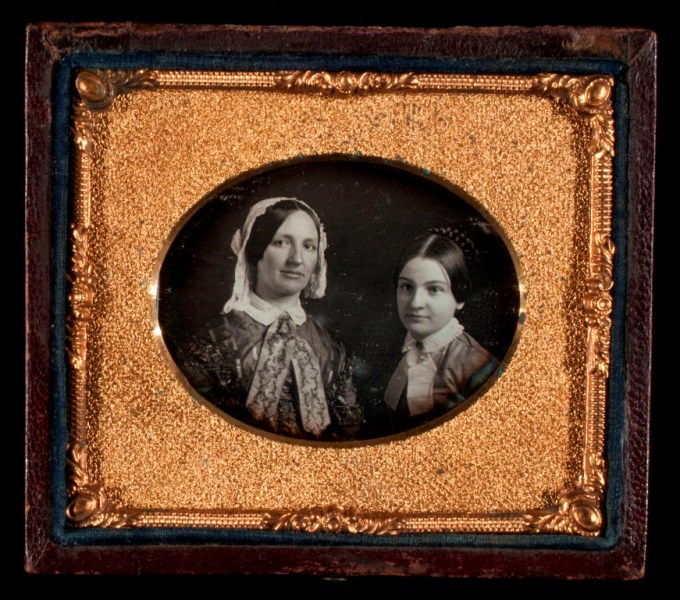
John Clarkson Jay’s letters begin in June, 1862 after the regiment had arrived at camp near Tenleytown but had not yet been formally mustered in. His letters give a clear portrait of camp life. John Clarkson Jay’s first letter was written June 2, 1862, shortly after his arrival at camp and described his journey there.
“After staying two days in the halls of the Capitol, we received orders this morning to march for this place, 8 miles distant from the Capitol, about 3 miles north of Georgetown, and 3 or 4 miles from the Potomac. It is not across the Potomac. They could not have picked out a hotter day. Several of our men gave out on the march & were picked up by the baggage wagons. We had of knapsacks & all our equipments on, which weight a great deal. I stood it. We rested three times on our way here. I did not take my knapsack off from the time we left the Capitol until we arrived at the camp. In all, we marched ten miles as we went two miles out of our way. We had nothing to eat from breakfast at six o’clock a.m. until half past 4 this afternoon.
After we arrived here & had chosen a field, we had to put up our tents which took a great while. We have Sibley’s tents — 12 or 13 men to a tent. They gave us a ration this afternoon at about 5 o’clock. I never relished anything more. Talk about coffee without milk.”
John Clarkson Jay’s biggest complaint was the lack of adequate access to bathing.
“The only thing about this camp which is objectionable is that there is no place for bathing. We are getting but nary good springs. Very much burnt on our necks & faces.”
In his next letter written on June 6, 1862, John Clarkson Jay gave an overview of the conditions of the camp, where the constant rain had caused numerous problems, as well as summary of their typical activities.
“We have had very wet weather since we have gone into camp. Nothing but continued rain. Insides of tents are all mud. We have no boards or anything to lay on but our blankets and knapsacks. We have no overcoats.
I have been on guard duty. Tour turn comes around once in ten or twelve days. You are on duty 24 hours. There are three reliefs. You are on guard two hours & then lay in guard tent for 6 hours, then two hours on guard & then 4 hours in guard tent & so on. I went on guard duty Wednesday evening at 8 o’clock a.m. I was put on the second relief so I was posted at 10 o’clock a.m. & remained on my post until twelve, raining hard all the time. Was relieved at 12 o’clock & rested four hours. Went on at 4 p.m., stayed on two hours, & then rested 4. Went on again at ten p.m. & stayed on until midnight, raining all the time. Then went back to guard tent & spent 4 hours with 30 men in it with no place to lay down & went on duty again at 4 o’clock a.m. until 6 a.m. & went back to my tent at 8 o’clock Thursday morning. It would not be so bad if it had not rained. But it rained steady all the time. I was soaked & had had no sleep. However, I slept well last night & am very well today.”
Camp Near Fort Gaines
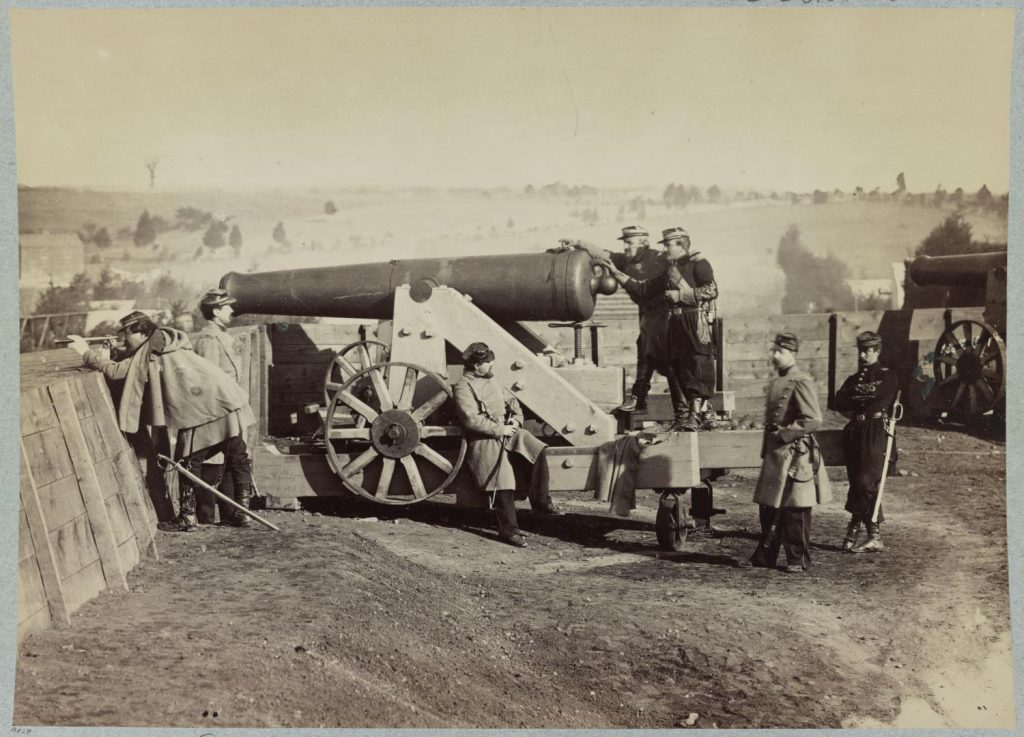
By June 10, 1862 the 71st New York National Guard were camped in front of Fort Gaines near Tenleytown. John Clarkson Jay wrote home to his mother with a description of the fort.
“The fort alongside of us is not a very large affair. It mounts four 32-pounders. It is an earthwork. It commands a very excellent position. The garrison consists of two companies of the 59th New York. They practice the guns every morning & fire over our heads. They do not fire balls, however. But before we came they practiced with balls at targets. Our camp, or the spot on which we are encamped was the winter quarters of the 55th New York (The French Regiment).
I am writing on my cartridge box & sitting on my knapsack while the rest in the tent are firing things at each for something to pass time.”
While in front of the fort, guard duty continued and John Clarkson Jay mentioned that there were fears about secessionists in the area sending signals to Confederate forces and spies.
“While engaged in battalion drill this evening, Secretary [Edward] Stanton drove up & had a long interview with our colonel. We know not what was the subject of their conversation.
The secessionists around here display signals at night from their houses & some of us will probably be detailed to guard their houses. Our colonel praised us on drill this evening on our proficiency.”
John Clarkson Jay Battles Vaccinations and Age Requirements
On June 12, 1862, John Clarkson Jay wrote home with potentially bad news about his service. The regiment was getting closer to mustering in but would require everyone under 21 to have permission from their parents. As John Clarkson Jay was only 17 at the time, he worried that even permission might not be enough for him to be allowed to stay.
“The regiment will probably be mustered into the U.S. service in two weeks or sooner. The orders to make out the muster rolls have arrived. Every member under 21 years of age must have a written permission from his parents. I should like to have one sent. I am afraid, however, that they will refuse to muster me in as I am under eighteen. They say they will not take any under that age.”
At the same time, additional trouble in the regiment was brewing. In the same letter Jay described desertion becoming a problem in the regiment.
“There is some dissatisfaction, I am sorry to say, in the regiment. A great many will refuse to swear in. Some 20 or 30 have already deserted — only one, however, from our company.”
John Clarkson Jay himself was worried about the prospects of the company if their captain left.
“We are very much afraid our captain will leave us. He has a government situation in New York & if he is absent much longer, he will lose it. If he goes, this company will be the same as done for. I will not serve under every man. Our first lieutenant is not good for anything. He has no presence of mind — Eugene Thom is his name from 11th Street. If our captain resigns & we are sworn in, the government has a right to appoint any man they like to take his command.”
On June 19, 1862, John Clarkson Jay wrote about another worry he faced: vaccination.
“Everyone in this company was marched up to the surgeon today to see if they ought to be vaccinated. He said I must. I thought you would prefer that I should be vaccinated with vaccine matter from a respectable source. I asked the surgeon if I might send home for the article. He said certainly. I wish you would send me some immediately on the receipt of this letter.”
On June 25, John Clarkson Jay was still waiting to be sworn in and still refusing vaccination.
“Our Colonel is in New York at present on business connected with the regiment. It is just a month since we left New York. When the Colonel comes back, which he will do in two or three days, the regiment will probably be sworn in. He said that he did not think I could get in on account of my age. I have not yet been vaccinated because I believe they had no right to do it until we are sworn in.”
Interestingly, despite John Clarkson Jay’s letters indicating the regiment wasn’t mustered in even by the end of June, the official records indicate that they mustered in on May 12, 1862 and mustered out on September 2, 1862. The regiment spend its whole length of service manning the defenses at Washington.
Later in the war, John Clarkson Jay served as a surgeon in New Orleans. He married Harriet Vinton, the daughter of General David Hammond Vinton. His 1923 obituary in the New York Times states that he was one of the founders of the New York Free Dispensary for Sick Children and that he translated medical works from German and French into English.
We’d like to give a special thanks to William Griffing of Spared & Shared for his work in transcribing and sharing these letters.
To read more of John Clarkson Jay’s letters as well as access thousands of other Civil War letters and documents, sign out for a Research Arsenal membership.
If you enjoyed this article, check out some of our other featured collections like Charles Brayton of the 3rd Massachusetts Infantry and Charles Hobbs of the 13th New Hampshire Infantry.
