
RG 94 Spotlight: 99th Ohio Infantry
The Research Arsenal is proud to be digitizing and adding historical records of Civil War regiments held at the National Archives to our online database so that researchers and historians can access material that previously required a trip to Washington D.C. The 99th Ohio Infantry is one of the many regiments that has been added to our database.
The 99th Ohio Volunteer Infantry: From Stones River to Chattanooga and Beyond
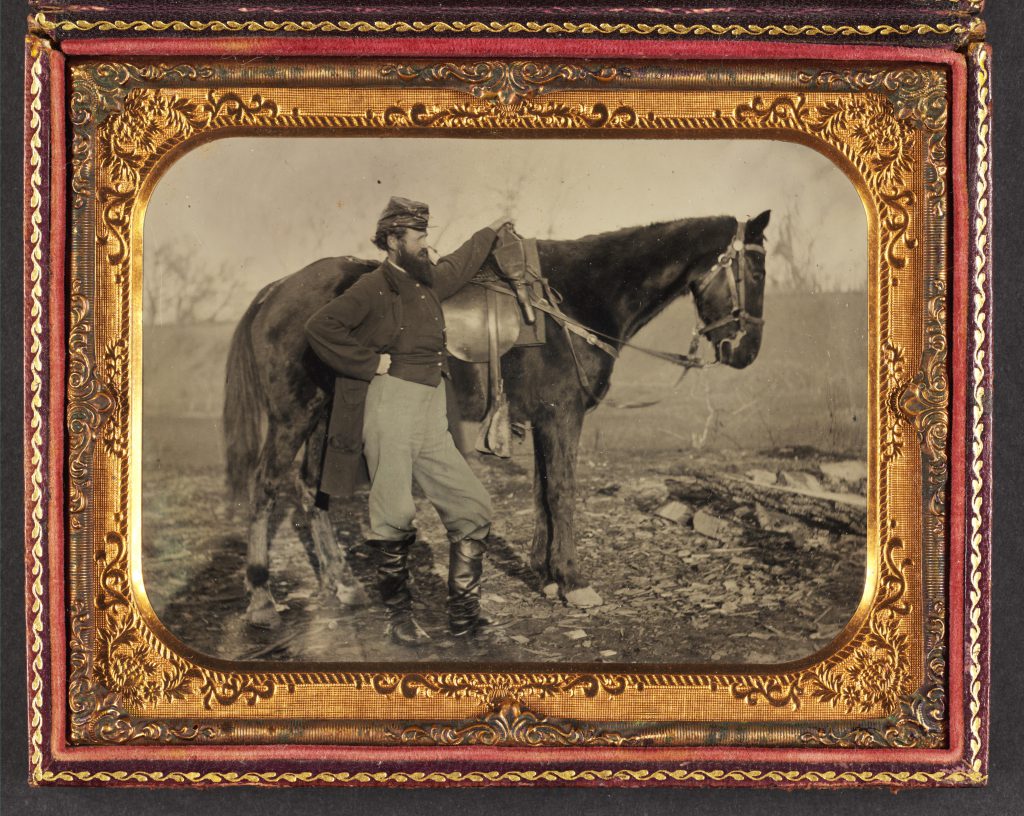
John E. Cummins of the 50th, 99th, and 185th Ohio Infantry regiments in Union uniform next to a horse. Unknown date and location. https://app.researcharsenal.com/imageSingleView/3588
The men of the 99th Ohio Volunteer Infantry entered the Civil War as part of the great wave of Ohio soldiers who answered President Abraham Lincoln’s call for volunteers in 1862. Organized at Camp Lima, Ohio, the regiment mustered into service in August 1862 and became part of the Army of the Cumberland, serving primarily in the Western Theater. Like many volunteer regiments, the 99th Ohio was composed largely of men from small communities who left behind families, farms, and occupations for an uncertain future. Their letters and wartime accounts reveal not only the hardships of campaigning but also the friendships, humor, and determination that sustained them through some of the fiercest fighting of the war.
Among those soldiers was Park Henry Fryer of Company B, who enlisted in August 1862. Fryer’s letters to his younger brother Samuel provide a remarkable glimpse into the life of an ordinary soldier. His correspondence captures the contrast between the lighter moments of army life and the harsh realities of combat that awaited the regiment.
Baptism of Fire at Stones River
The 99th Ohio’s first major engagement came during the Battle of Stones River, fought near Murfreesboro, Tennessee, from December 31, 1862, to January 2, 1863. The regiment served in Colonel Samuel Beatty’s brigade of General Horatio Van Cleve’s division. Although the battle had raged for several days, the regiment faced its greatest trial on January 2, when Confederate General John C. Breckinridge launched a powerful assault against the Federal left.
During the battle, Confederate General Robert Hansen of Kentucky was killed. Morrow described the scene in one of his letters: “Hanson was a short but very fat man; he weighed nearly 300 pounds and mounted upon his splendid white horse, he became a conspicuous mark for the shots of our men and particularly the Kentuckians of our army who blazed away in grand style until old fatty rolled from his horse about as gracefully as a hogshead of whiskey would tumble downstairs.”
Chaplain James M. Morrow of the 99th Ohio later described the movement toward Stones River and the growing realization among the soldiers that they were approaching a major battle. “All day the booming guns seemed to tell of hot work ahead,” he wrote, describing the march toward Murfreesboro. The men saw the signs of war along the road—burning buildings, dead horses, and wounded soldiers carried toward the rear—before they ever entered the fight themselves.
On January 2, Breckinridge’s Confederate troops advanced in overwhelming numbers against the Federal position. Morrow recalled that the Confederate attack was not a disorderly rush but a disciplined assault: “It must be admitted that they came, not as a mob, but in good order. They marched in splendid military style and advanced as coolly and gracefully as if on dress parade.”
The 99th Ohio held its position as long as possible, but the force against them was too great. Morrow explained that retreat became necessary, writing that “it would have been a little less than murder to have not done so.” The regiment withdrew under intense fire, suffering heavy casualties. Lieutenant Colonel John E. Cummins reported that the regiment entered the fight with 12 officers and 369 enlisted men and lost 88 men killed, wounded, or missing.
During the retreat, several acts of courage became part of the regiment’s history. Captain William C. Scott of Company A was struck by a rifle ball that shattered his thigh. Unable to carry his sword while wounded, Scott placed himself over it so that Confederate soldiers would not capture it. Later, when the weapon was recovered and returned to him, Morrow recalled that Scott smiled and exclaimed, “Good, the Rebels did not get it.”
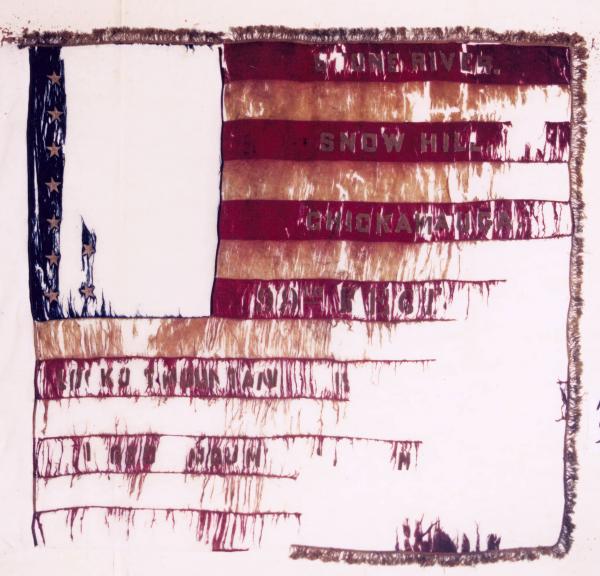
Perhaps the most famous moment from the battle involved the regiment’s colors and Color Sergeant Moore E. Thorne. After the 99th Ohio reformed following the retreat, another officer asked Thorne which regiment he belonged to. When Thorne answered “The 99th Ohio,” the officer invited him to join his own unit. Thorne refused, declaring:
“No, damned if I will. I will wave this flag over the 99th Ohio or I will wave it nowhere. Men of the 99th Ohio, rally around your own flag and follow me.”
According to Morrow, Thorne then led the men forward “with the coolness of Ney and the courage of Murat.” The battered colors became a symbol of the regiment’s determination throughout the remainder of the war.
Reflecting on the battle afterward, Morrow wrote that Stones River was “a wonderful conflict of arms,” describing the fighting as “an ocean of fire swept by a tempest of lead and iron.” The 99th Ohio had experienced the terrible reality of Civil War combat, but it had also established its reputation for courage under fire.
Recovery and Soldier Life Away From the Battlefield
Following Stones River, many wounded soldiers from the regiment were sent to hospitals for recovery. Park Fryer spent time at Hospital No. 2 in New Albany, Indiana, where his letters reveal a very different side of military service. Rather than describing battle, Fryer wrote of friendships, religious meetings, and the daily routines of a convalescent soldier.
In April 1863, Fryer wrote happily to his brother that he was “well and hearty and enjoying myself hugely.” He attended church services regularly and described the religious revival taking place among the soldiers and civilians of New Albany. He even joked about the comforts of hospital life, writing, “soldiering ain’t so bad after all.”
Fryer also described the camaraderie among wounded soldiers. He mentioned fellow soldiers recovering from their wounds, including Franklin Hickock of the 15th Indiana Infantry, and explained that they were spending their days together while regaining their strength. His letter shows that even during illness and recovery, soldiers formed friendships that helped them endure separation from home.
By July 1863, Fryer was preparing to return to his regiment. He reflected on the difference between celebrating Independence Day at home and celebrating it as a soldier. The previous year, he remembered being with friends and family; now he joined a military celebration in New Albany complete with marching, speeches, music, and a large dinner.
Yet beneath the humor was an awareness of the hardships ahead. Fryer wrote that easy times would not last forever, saying, “There is hardships coming but here is what is prepared for it in any shake for as long as he can stand it.”
Chickamauga and the Fight for Chattanooga
After returning to active service, Fryer and the 99th Ohio participated in the Chickamauga Campaign in September 1863. The battle resulted in a major Confederate victory, forcing the Army of the Cumberland to withdraw into Chattanooga. The 99th Ohio fought during the engagement and suffered significant losses: five men, including two officers, were killed; twenty-eight were wounded; and twenty-four were captured.
Writing from the rifle pits outside Chattanooga in October 1863, Sergeant Fryer described the difficult conditions following the battle. The men endured cold rain and inadequate shelter while strengthening their defensive positions. “It has been raining here for the last 4 days and is not through yet which makes it very disagreeable for us as we have nothing but our small tents,” he wrote.
His description of army life was blunt:
“When a man wants nice comfortable times, let him be in the army when it rains for two or three days right ahead and then he can give some idea what a soldier’s life is.”
Despite the hardships, Fryer remained proud of his regiment. He assured his brother that the 99th Ohio would continue to stand by its colors:
“As for standing up to the old colors, you need not be alarmed though they had like to of shot ours all away. Allen County ought to furnish us with another and we will warrant it to come out on the right side every time.”
The regiment became part of the 4th Army Corps and remained with the Army of the Cumberland through the campaigns of 1864. During the Atlanta Campaign, the 99th Ohio fought at places such as Rocky Face Ridge, Resaca, and Kennesaw Mountain. It was during this campaign that Park Henry Fryer received the wounds that led to his death in a Chattanooga hospital on July 3, 1864.
Legacy of the 99th Ohio Infantry
The history of the 99th Ohio Volunteer Infantry reflects the experiences of thousands of Civil War regiments: young men who left home believing they were serving a cause greater than themselves, endured battles and hardships beyond imagination, and formed bonds that lasted a lifetime.
From the desperate fighting at Stones River to the struggle for Chattanooga and the campaigns that followed, the soldiers of the 99th Ohio repeatedly demonstrated courage and determination. The words of men like Park Henry Fryer and Chaplain James Morrow preserve not only the record of battles but also the human story behind them—the fear, humor, faith, and loyalty that defined the Civil War soldier’s experience.
Sources
The Research Arsenal is proud to hold 238 digital scans of the 99th Ohio Infantry’s regimental history on its database. These consist of just over 200 pages of material from the National Archives Records Group 94 files. These include a Regimental Descriptive & Morning Report book and a Letter & Order book. Visit the Research Arsenal, click on “Search NARA Records” then select “RG94” and “99th Ohio Infantry” from the drop-down menus. In addition, the Research Arsenal contains letters, and other forms and documents relating to the 99th Ohio Infantry.
National Park Service – Civil War Soldiers and Sailors System: 99th Ohio Infantry
https://www.nps.gov/civilwar/search-battle-units-detail.htm?battleUnitCode=UOH0099RI
Ohio Civil War – 99th Ohio Volunteer Infantry
https://www.ohiocivilwar.com/cw99.html
Research Arsenal – 99th Ohio Infantry Letters of Park Henry Fryer
https://app.researcharsenal.com/imageSingleView/207024
Dan Masters’ Civil War Blog – “A Wonderful Conflict of Arms: Skedaddling with the 99th Ohio at Stones River”
https://dan-masters-civil-war.blogspot.com/2021/12/a-wonderful-conflict-of-arms.html
